
The Vietnamese tea ceremony is an essential part of traditional Vietnamese weddings, also known as an engagement ceremony. Quiet and understated, it carries deep meaning about love, family, and respect. This article explores the cultural significance behind this enduring tradition.
1. What Is the Vietnamese Tea Ceremony?
The term Vietnamese wedding tea ceremony refers to the traditional engagement ceremony known in Vietnamese as “lễ ăn hỏi.” It is the formal occasion when the groom’s family visits the bride’s home to present offerings and officially confirm the marriage agreement between the two families. It formally marks the union of two families before the couple begins married life.
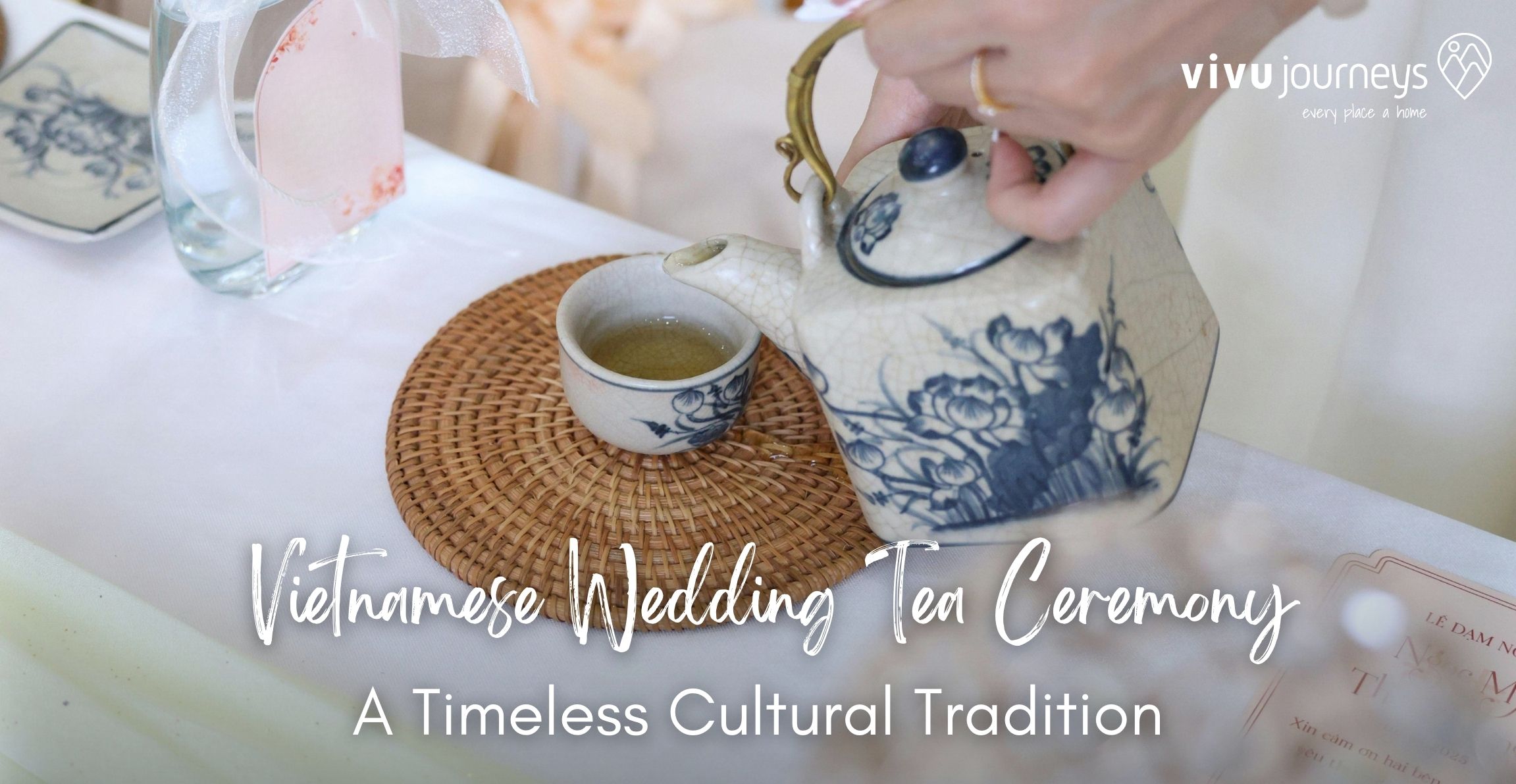
During the engagement ceremony, the groom’s family visits the bride’s home with traditional offerings. After formal introductions and gift exchanges, tea is served as part of the ritual. The couple presents tea to their parents and senior family members, officially introducing themselves as an engaged couple.
Tea in this context is not for tasting or social enjoyment. It is a structured family ritual used to show respect to elders, formally acknowledge the engagement, and uphold family tradition. The ceremony is typically scheduled according to auspicious dates chosen based on the Lunar calendar, reflecting the spiritual and cultural framework of Vietnamese marriage customs.

2. The Meaning Behind the Ritual
Although modern Vietnamese weddings may incorporate Western elements, the tea ceremony remains deeply rooted in tradition. It continues to be practiced because it connects the two families, serving as a blessing and honoring ancestors before the bride and groom begin their life together.
2.1. Preserving the Tradition of the Vietnamese Tea Ceremony
In the engagement ceremony, the Viet tea ceremony is usually held in front of the ancestral altar. The date and time are carefully chosen by the family, usually coinciding with the lunar calendar.
Maintaining this ceremony helps preserve the traditional structure of Vietnamese wedding customs, ensuring that family recognition remains central to the marriage process.

2.2. Expressing Respect and Family Education
In Vietnamese culture, respect for elders reflects a person’s upbringing. Pouring tea with both hands and following the order of age demonstrates proper family etiquette.
The tea ceremony embodies values of filial piety and hierarchy, reinforcing the importance of respect within the wedding tradition.

2.3. Connecting Two Families and Affirming the Marriage
In Vietnam, marriage symbolizes the union of two families, not just two individuals. The formal tea ceremony affirms this bond during the engagement ceremony.
When the couple serves tea to their parents, it is a gesture of acknowledging the family’s role in raising them and of accepting responsibility as they enter a new phase of life together. When parents receive the tea and offer blessings, the engagement gains official family approval. Through this ritual, the Vietnamese wedding tea ceremony serves as a bridge between the two families.
You may like to read more about Vietnamese culture:

3. Preparing for the Vietnamese Tea Ceremony
Preparing for the Vietnamese wedding tea ceremony involves careful planning, and the following elements are typically followed:
- Choosing an auspicious date: Families often consult a shaman or use the lunar calendar to select a day believed to bring harmony and good fortune.
- Traditional offerings: The groom’s family prepares red lacquer trays containing symbolic items such as tea, betel leaves, and areca nuts, traditional cakes, wine, fruit, and jewelry.
- Tea set and ceremony arrangement: A tea set (such as green tea, lotus tea, jasmine tea) and ceremonial space are harmoniously arranged at the bride’s home, often decorated with festive decorations and an ancestral altar.
- Attire: The bride and groom usually wear traditional Vietnamese ao dai or formal attire appropriate to the cultural nature of the event.
- Family participation: Close family members from both sides attend, with elders often playing an important role in presiding over and offering blessings.
These preparations ensure that the tea ceremony runs smoothly and formally, honoring tradition while celebrating the couple’s engagement.

The Vietnamese tea ceremony remains one of the most important rituals in traditional engagement and wedding ceremonies. More than just a formality, it introduces the bride and groom to both families, shows respect for elders, and formally affirms their union. Despite modern changes in wedding styles, this ritual continues to be a cornerstone of Vietnamese marriage in terms of family, tradition, and shared responsibility.
For deeper insights about Vietnamese culture and travel, enquire now, or become our partner today!