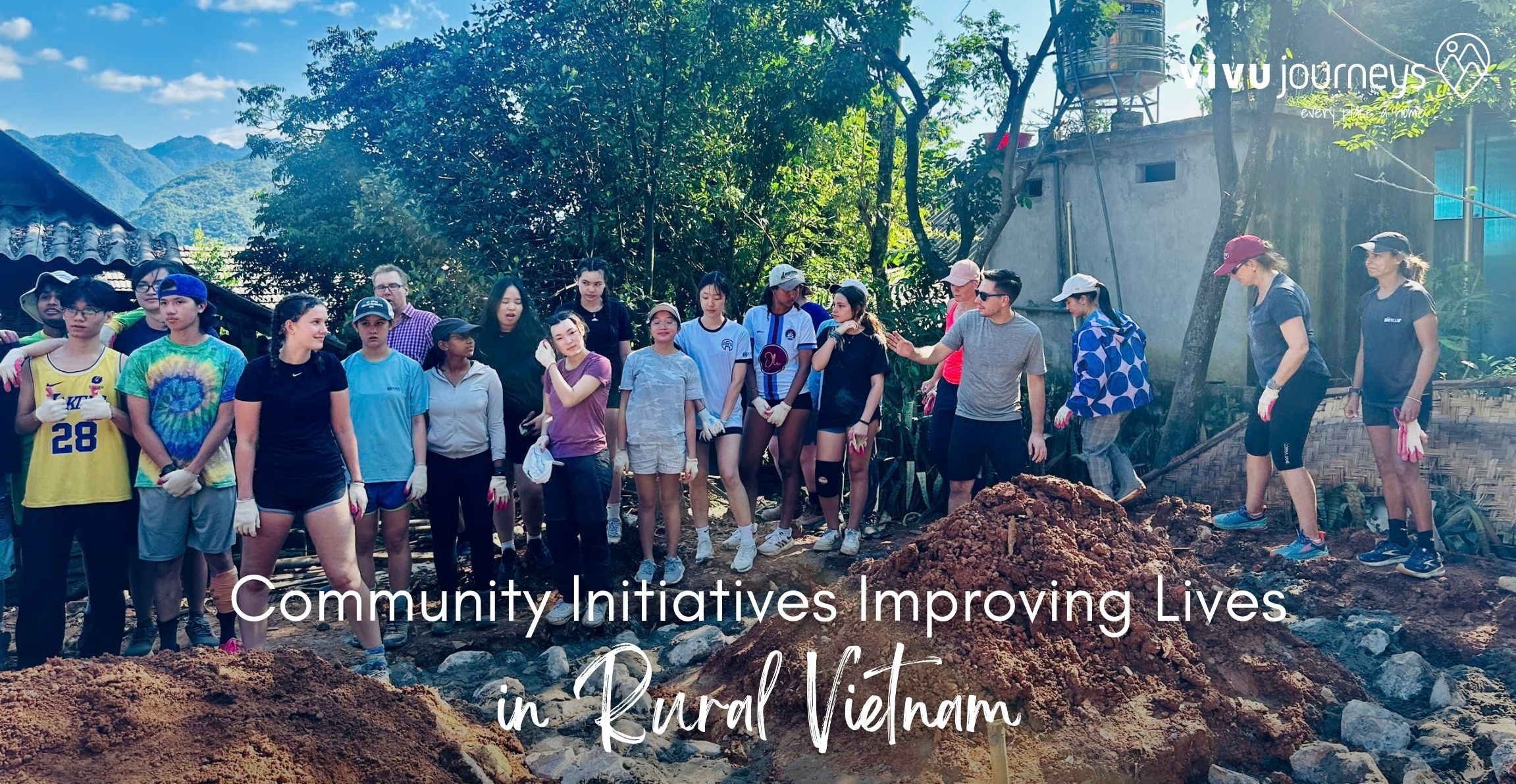
Through community-based tourism in Vietnam, Vivu Journeys supports rural communities with training-led development and locally owned travel initiatives.
1. Community Initiatives Rooted in Rural Vietnam
At Vivu Journeys, our community initiatives are rooted in the everyday lives of rural communities. We design travel experiences in ways that allow local people to take an active role, build practical skills, and have a voice in decisions that affect their future.
Many of these efforts grow through community-based tourism. Residents welcome guests, guide activities, and share their culture in their own way. We support this with hands-on training, small-scale eco-friendly construction, and regular follow-up, so tourism develops at a pace that feels right for the community.
Through this approach, tourism becomes an integrated part of the local economy, supporting livelihoods, skills development, and community-led decision-making. It creates steady income for families, encourages care for the natural environment, and helps preserve local traditions. Rather than focusing on short-term gains, this approach supports long-term community development shaped by the community itself.

2. Tourism Impact Through Community-Led Projects

2.1. Ky Anh Village – A Community-Led Initiative in Central Vietnam
Ky Anh is a rural village in the Tam Ky district, Quang Nam province, where most families rely on farming and fishing. Average income is around 50 USD per person per month, so new opportunities play an important role in daily life.
For more than 20 years, we have worked with local leaders and partners to support community initiatives that improve living conditions step by step. Recent projects include upgrading community spaces and supporting small-scale infrastructure.
Through community-based tourism, Ky Anh has begun to see new sources of income. In 2024, local projects generated 33,824 USD, and by May 2025, income had already reached 23,021 USD. These earnings come from homestays, meals, guiding, and cultural activities, helping families move beyond farming as their only source of income and strengthening long-term community development.
Tourism income is also reinvested in the village. In 2025, funding has supported the construction of a perimeter wall and yard, improving safety and creating a better shared space for community activities.

2.2. Mai Chau – A Proven Model of Community-Led Tourism Growth
Mai Chau, located about 150 kilometres southwest of Hanoi, is known for its beautiful valley landscapes and the rich culture of the White Thai ethnic community. Over the years, it has become a strong example of how community-based tourism can support both cultural preservation and economic growth.
Our community initiatives in Mai Chau focus on improving livelihoods while protecting the environment and local traditions. Recent projects have included small but meaningful infrastructure improvements such as roads, household yards, and community spaces.
The impact is also clear in income. In 2024, tourism activities generated 20,136 USD for local people, and by May 2025, revenue had reached 14,423 USD. Through steady, community-led efforts, Mai Chau continues to show how community development and responsible tourism can grow together.
At the same time, project funding in 2025 has supported road improvements and a solar-powered lighting system, helping make travel safer and more sustainable for both residents and visitors.

Explore more of our community initiatives and impact stories:
- Ban Huay Thom Village: Community Empowerment in the Mountains of Northern Laos
- How Community Tourism Is Transforming Kok Sangke Village
3. What Drives Community Development Across Our Initiatives
Behind every successful community initiative is meaningful participation. We design programmes that connect visitors and residents in ways that create real value on both sides.

3.1. Service Learning
Participants join hands-on projects such as building or improving schools, libraries, and homes. These activities support long-term community development by strengthening local infrastructure that families use every day.
3.2. Cultural Exchange
Visitors take part in daily life through activities like silk weaving, cooking, farming, and homestays. These exchanges help preserve traditions while creating income through community-based tourism.
3.3. Educational Trips
School groups join themed trips that combine trekking, agriculture, team-building, and environmental learning. Students gain real-world understanding, while local communities benefit from responsible community tourism.
3.4. Community Health Projects
Health-focused initiatives support local clinics and home visits, helping improve basic healthcare access. At the same time, participants build cross-cultural understanding and contribute to stronger, healthier communities.
Community development is most effective when it is shaped by local ownership rather than external direction. In villages like Ky Anh and Mai Chau, tourism income is reinvested into shared infrastructure and services, allowing progress to continue long after each visit ends.
Subscribe to our new LinkedIn newsletter – Travel for Impact and partner with us to start your responsible journeys with Vivu Journeys.




![[Blog-VVJ] Thumbnail (2)](https://vivujourneys.com/wp-content/uploads/elementor/thumbs/Blog-VVJ-Thumbnail-2-rjo40j2a2wx8tf20kauc4vmqpply0isr5wexq6s8f4.jpg "[Blog-VVJ] Thumbnail (2)")