
Vietnamese street food is widely known for its rich flavors, unique cooking methods, and diversity. These popular dishes are not only delicious but also reflect Vietnam’s distinctive street food culture. Let’s explore this culinary world with Vivu Journeys!
1. Why Vietnamese Street Food Is Special
Vietnamese cuisine is gradually establishing its position on the world culinary map. Many iconic dishes have become globally beloved, with “phở” and “bánh mì” even included in the Oxford English Dictionary, which is proof of their profound influence on the international public.
So, what makes Vietnamese cuisine so impressive worldwide?

1.1. A World of Flavour and Textures
Vietnamese cuisine is built on a vibrant harmony of flavors. Each region has its own characteristics: the North generally favors light, delicate flavors, the South prefers a sweet and sour taste, and the Central region has a strong, spicier, and saltier flavor.
The textures of the dishes are also memorable when the chewiness of meat, the crispness of fried rice paper, and the freshness of the herbs can blend together in a single bite of, for example, “nem nướng cuốn”, creating perfect harmony.
This diversity is partly from Vietnam’s long cultural development and by geographically spreading out across various climates and regions, naturally forming a colorful and multi-layered culinary identity.

1.2. The Beauty Behind the Craft
Street food may seem simple, but behind each dish is the quiet mastery of cooks who have perfected their techniques over generations. Gordon Ramsay once joked while struggling with making Vietnamese “bánh cuốn” (Steamed rice rolls): “Fortunately, I wasn’t born in Vietnam, otherwise I would just be a bad cook.” This humorously illustrates how everyday Vietnamese dishes can be elevated.
From secret family recipes to processing methods that take hours to complete, each step reflects dedication and skill. And more than technique, there’s something even more significant: traditions passed down through generations, constantly improved and deeply respectful of old values. This combination of craftsmanship, heritage, and creativity creates the soul of Vietnamese street food.

2. Must-Try Vietnamese Street Food
Vietnamese street food is incredibly diverse. Each dish carries the imprint of the land, daily habits, and local pride. Below are some famous local dishes that tourists shouldn’t miss, and some tips for food lovers.
2.1. “Phở” (Soft noodles, tender meat, clear, flavorful broth)
“Phở” is the soul of Vietnamese cuisine. A bowl of simmered broth, rice noodles, tender slices of beef or chicken, and various herbs, served with some fried dough sticks (locally called “quẩy”), creates a dish that is both comforting and complex. Eating “phở” at a small street food stall early in the morning is a timeless local habit.
A tip for food lovers: If you come to Vietnam, try different versions of “phở”, such as “phở tái lăn” (rare beef stir-fried quickly with ginger and garlic) or “phở trộn” (replacing the hot broth with a sweet and savory sauce mixed with various herbs).

Looking for something more unique? Read about the “phở cocktail” – a warm and mysterious combination here.
2.2. “Bún chả” (Grilled pork and noodles)
Originating from Hanoi, “bún chả” consists of grilled pork served with rice vermicelli, fresh herbs, and a sweet and savoury dipping sauce. It is usually served with herbs and pickles to balance the fatty flavour of grilled meat, creating one of Vietnam’s best street food experiences.

2.3. “Bánh mì” (Crunchy baguette with savoury fillings)
Crispy outside, fluffy inside, and generous fillings – “bánh mì” has layers of flavor. Saigon “bánh mì” is famously stuffed with various fillings such as ham, sausage, pate, pickles, herbs, and a few slices of chili for added spiciness. In addition, banh mi also has many other fillings, from omelets, grilled meat, fish cakes, to various other options on the go.
Fun fact: In Hanoi, there’s a famous type of “bánh mì” sold late at night called “Bánh Mì Dân Tổ”, which means “the racers’ bánh mì” since it was sold from 3:00 to 6:00 AM, serving night owls and young people returning home after late nights out. This bread has up to 12 different fillings. Nowadays, it’s so popular that people start lining up from 3 AM, attracting not only night workers but also curious food lovers from all over the city.

2.4. “Bánh xèo” (Crispy pancakes with herbs and dipping sauce)
“Bánh xèo” is a crispy fried golden pancake filled with shrimp, pork, and bean sprouts. Cut and wrapped in fresh herbs and rice paper, then dipped in a sweet and sour sauce, it offers a fun and interactive way to enjoy Vietnamese street food. The name “xèo” comes from the delightful sizzling sound when pouring batter into a hot pan.
A tip for food lovers: Pancakes in Central Vietnam are usually small, with a thick crust and crispy fried, while those in Southern Vietnam are larger, with a thinner crust and less oil.

2.5. “Chè” (Traditional sweet desserts)
“Chè” is a general term for many types of Vietnamese sweet soup, made from beans, fruit, jelly, and coconut milk. Often enjoyed in the afternoon or evening, “chè” is a delightful stop on a day exploring street food.
A tip for food lovers: If you have the chance, be sure to try Hue’s royal desserts. These are exquisite desserts originating from the royal cuisine of the Nguyen Dynasty. Among them, perhaps the most unique and interesting is “chè bột lọc heo quay”, which is a sweet dessert with chewy tapioca pearls, filled with rich, flavorful roasted pork.

2.6. “Hủ tiếu” (Southern-style rice noodle soup)
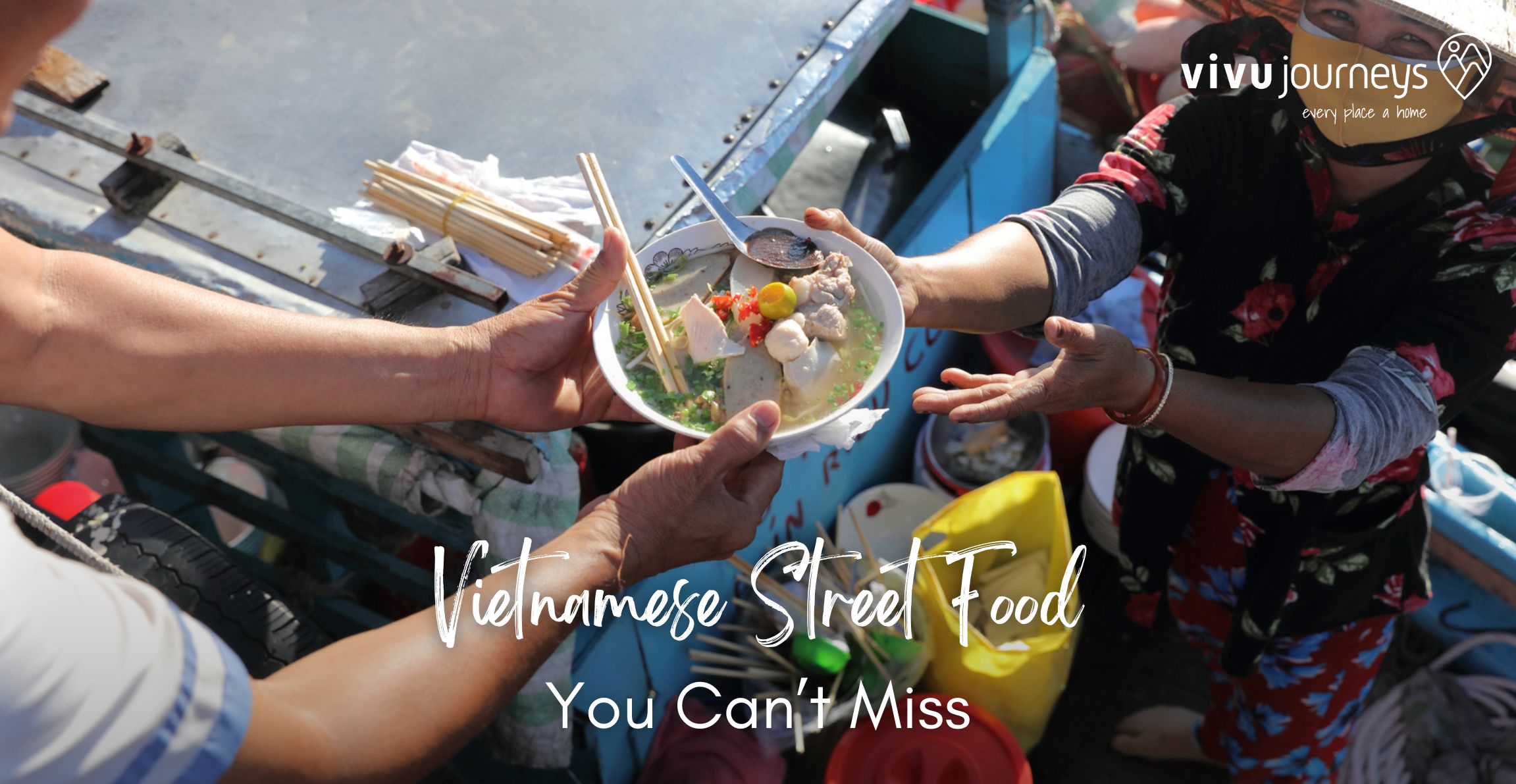
“Hủ tiếu” reflects the flavors of Southern Vietnam. The rice noodles are thin and chewy; the broth is meaty and savoury from bones or meat; and it’s packed with ingredients like shrimp, minced meat, quail eggs, and seafood. Each eatery adds its own variations, making this dish worth trying multiple times.
Interesting fact: On the floating markets of the Mekong Delta, steaming bowls of “hủ tiếu” are cooked right on floating kitchens and served directly on the boats. This is a very interesting way to experience the riverine cuisine and culture of the Mekong Delta people.

2.7. “Cơm tấm” (Broken rice with grilled meat)
“Cơm tấm”, with “cơm” referring to cooked rice, while “tấm” means broken rice grains, transforms the simple broken rice dish into a delicious meal with grilled pork, egg, pickled vegetables, and fish sauce. It’s nutritious, flavorful, and deeply connected to daily urban life, especially in Ho Chi Minh City.
Fun fact: Have you heard of the Vietnamese folk tale “Tấm and Cám“? While “Tấm” here has the same meaning as broken rice grains that are imperfect yet still valuable as in “cơm tấm”, “Cám” is the thin husk and rice bran removed during milling. Even in folklore, rice reflects everyday life in Vietnam.

You may also like:
3. Tips for Enjoying Vietnamese Street Food
Exploring Vietnamese street food is easy and rewarding, especially if you follow a few simple local tips.
3.1. Where to Go
Rather than luxury restaurants, travelers should look for lively streets, local markets, night food areas, and small alleys filled with low plastic stools. Places where locals gather are often where the best food can be found. Don’t hesitate to follow the crowd; it’s usually a good sign.
3.2. How to Order
Foreigners can order by pointing at dishes or menus, which is perfectly acceptable, and vendors are often happy to help. English is also popular in rural Vietnam. If you’re unsure, just smile, ask politely, and enjoy the experience. Eating like a local means being curious, relaxed, and open to surprises.
However, you can learn some useful Vietnamese foodie phrases, for example:
- “Cái này là gì?” – What is this?
- “Ngon quá!” – So delicious!
- “Cho tôi món này.” – I’ll have this, please.
- “Bao nhiêu tiền?” – How much is it?
Vietnamese street food is more than just something people eat; it’s something they experience, where each dish offers a glimpse into daily life and cultural heritage. Exploring Vietnamese street food is one of the most rewarding ways to understand the country, bite by bite.
For deeper insights about Vietnamese foods and facts, Book Enquiry or become our partners today!