

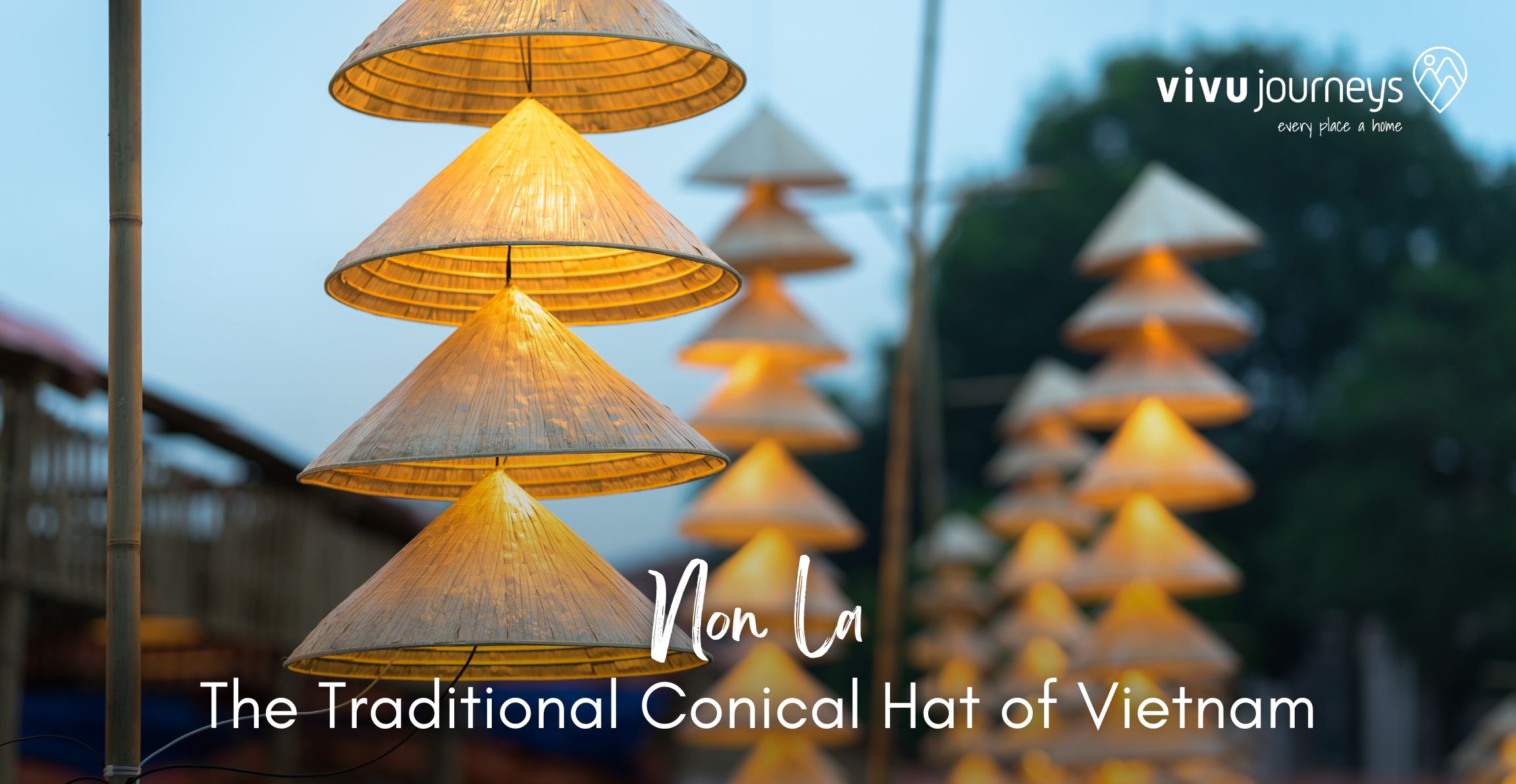
Non la (or “nón lá”) is more than just a Vietnamese hat; it is a cultural icon associated with everyday life, heritage, and craftsmanship. This guide will reveal the origins, styles, and best places for visitors to experience the authentic art of the Vietnamese conical hat.
1. History & Culture of Non La
1.1. Origins of the Non La in Vietnam
The non la has been around for so long that no single story of its origin is agreed upon, but all point to its deep connection to Vietnam’s wet rice culture and tropical climate.

- Ancient Traces in Early Civilizations
Many historians believe the non la may date back more than 6,000 years, to the Bach Viet period, the early period of rice-growing culture in Southeast Asia. Others point to its appearance on the Ngoc Lu bronze drum and Dao Thinh vase from 2,500 – 3,000 BC, with images of people wearing conical hats, as strong evidence of its ancient origins.
- Legends and Mythical Stories
It also appears in Vietnamese folklore, such as the story of Chu Dong Tu and the hero Thanh Giong. It is also explained by the legend of a goddess wearing a giant conical hat woven from four large leaves sewn together. Wherever she went, the clouds cleared, and the weather became mild. Before leaving, she taught people how to farm and live in harmony with nature. To show gratitude for her kindness, the people built a temple and recreated her conical hat using palm leaves and bamboo.
- Popularity in the Tran Dynasty
The non la became widely popular during the Tran Dynasty in the 13th century, when it appeared frequently in daily life and in works of art. A notable example is the painting The Mahasattva of Truc Lam Coming out of the Mountain, painted in 1363, depicting King Tran Nhan Tong returning to Thang Long, surrounded by attendants wearing conical hats, providing one of the earliest illustrated records in use.
1.2. Symbolism in Vietnamese Culture
The non la hat has a profound cultural meaning, reflecting the daily life, traditional values, and warm personality of the Vietnamese people.
- Daily-life friendly image: The conical hat represents Vietnam’s agriculture, providing shade for farmers in the fields, along with street vendors along the riverbanks, and appearing naturally in daily rural life.
- Meaningful souvenir: For tourists, the non la hat is a precious souvenir, handmade, natural,l and rich in local identity, preserving the warmth and hospitality of the Vietnamese people in a simple, symbolic form.
- Traditional beauty of women: Usually combined with the ao dai, the Vietnamese hat symbolizes the elegance, gentleness, and grace of Vietnamese women.

1.3. Role in Ceremonies, Festivals, and Performances
In Vietnamese culture, the non la appears in many rituals and festivals throughout Vietnam, such as the Hung Temple Festival, Lim Festival, Hue Festival, and Ba Chua Xu Festival. Regardless of the region, the conical hat naturally blends into the festival atmosphere, bringing a familiar traditional touch to both local and national events.
During these events, the conical hat often becomes an artistic element – expressed through non la dances, performances, and formal rituals, highlighting the elegance of Vietnamese culture. Its presence brings harmony to the festival atmosphere and gives visitors a deeper connection with Vietnamese traditions.

2. Types and Styles of Non La
2.1. Regional Variations: North, Central & South
The non la hat is the most widely used hat throughout Vietnam – appearing in everyday life, agriculture, markets, and river scenes. In addition to this classic shape, each region has developed its own variations, blending local culture and aesthetics into unique hat styles.
- Flat palm hat – Northern Vietnam: A wide-brimmed hat, often worn with a four-panel dress, creating an iconic image of “quan họ” (a romantic folk performing art) artisans and Northern folk culture.
- Poem hat – Hue: A delicate conical hat with verses or motifs hidden in the sunlight; when combined with “áo dài”, it becomes a romantic symbol of graceful Hue women.
- Horse riding hat – Binh Dinh: A sturdy local variant with a thicker frame, reflecting the practical lifestyle and craftsmanship of South Central Vietnam.
- Conical hat with checkered scarf – Southern Vietnam: Conical hats in the South are often thinner and lighter, suitable for the warm climate and daily river life of the Mekong Delta. Combined with the traditional “khăn rằn”, a type of checkered scarf originating from Khmer culture, they create one of the most recognizable symbols of Southern identity.

Read More: Vietnam Landscape: A Journey Through Natural Beauty
2.2. Materials: Palm Leaves, Bamboo & Natural Fibers
Vietnamese conical hats are made from a variety of natural materials, each reflecting a unique regional craft tradition.
- Palm-leaf hats: Light, pale-green palm leaves are washed, dried, and pressed to create the classic clean, smooth finish associated with northern-style non la.
- Coconut-leaf hats: Coconut fronds are treated for durability, producing hats with a rustic southern charm.
- Sedge grass hats: Dried and flattened sedge grass panels are stitched together, often decorated with hand-painted art or calligraphy.
- Almond-leaf skeleton hats: Cleansed leaf skeletons are assembled into translucent panels that glow beautifully under sunlight.
- Lotus-leaf hats: Naturally dried lotus leaves are reinforced and shaped, keeping their natural vein patterns for a textured, organic look.

2.3. Differences in shape, size, and decoration
Conical hats come in many different sizes, depending on their intended use, such as for protection, performance, or souvenirs. In addition, through a long journey of change, today, many other presentations have breathed life into the conical hat, bringing creativity and personality to this traditional form with many different designs, colors and materials:
- Painted conical hats: Hand-drawn flowers, landscapes, and architectural motifs turn the hat into a wearable artwork.
- Embroidered conical hats: Silk-thread embroidery adds color, texture, and delicate patterns, transforming the conical hat into a decorative collectible.
- Silk conical hats: Made by layering fine silk over a hat frame, these versions have a soft sheen and elegant drape, often chosen for fashion photos, performances, or premium gifts.

3. Where to See and Buy Non La
3.1. Hanoi: Local Markets & Souvenir Shops
Local markets such as Dong Xuan Market, shops in the Old Quarter, and merchants on the streets display a wide variety of non la hats, from everyday to decorative hats, perfect for group tours or carefully curated gift sets.
3.2. Hue: Traditional Craft Villages
Poetic, artisanal, and famous worldwide – Hue’s Tay Ho and Phu Cam villages offer authentic encounters with traditional hat-making techniques. Ideal for culture-focused itineraries and workshop-based travel programs.
3.3. Can Tho & the Mekong Delta: Riverside Markets & Workshops
Floating markets and riverside craft spaces in the Mekong Delta allow visitors to observe artisans at work outdoors. These workshops are a powerful connector for experiential tourism and community-based tourism products.

Bring the story of the non la to life by exploring the landscapes and cultures where this iconic hat belongs:
- 12-Day Tailored Family Adventure: A balanced journey through Vietnam’s nature and heritage – perfect for families wanting shared adventures.
- 8-Day Essence of Vietnam: Travel from Hanoi to Ho Chi Minh City, with highlights such as Ha Long Bay, Hue, and the lantern-lit streets of Hoi An.
- 14-Day Highlights of Vietnam: A complete north-to-south discovery of mountains, coastlines, ancient towns, and the vibrant Mekong Delta.
The conical hat is more than just a hat – it is a cultural symbol that connects the landscape, people, and traditions of Vietnam. Understanding its story will enrich every trip, especially for fellow travelers who are looking for deeper cultural values.
For tailored programs or collaboration opportunities, partner with us or submit a request via booking enquiry.