
Supporting economic empowerment is one of Vivu Journeys’ core commitments within our travel-for-impact approach. We believe travel delivers its greatest value when it enhances authentic guest experiences while creating sustainable livelihoods for local communities.
1. Where Supporting Economic Empowerment Meets the SDGs
At Vivu Journeys, supporting economic empowerment goes beyond generating short-term tourism income. It means intentionally designing travel experiences that enable local people to participate meaningfully in the tourism value chain, through skills development, fair access to opportunities, and long-term economic inclusion.
This commitment aligns closely with several UN Sustainable Development Goals (SDGs), particularly:
- SDG 1: Poverty reduction
- SDG 4: Skills development and vocational training
- SDG 8: Decent work and sustainable tourism that creates jobs
- SDG 10: Social and economic inclusion
- SDG 12: Sustainable tourism that promotes local culture and products
- SDG 16: Inclusive, participatory, and transparent decision-making

Economic empowerment, for us, is not a by-product of tourism; it is a design principle that shapes day by day. With structured commitments, meeting and complying with the above commitments becomes easier, enabling faster progress toward sustainable community development by increasing income at the grassroots level and improving living standards.
2. How We Put This Commitment into Action
At Vivu Journeys, supporting economic empowerment is embedded into how our journeys are designed, delivered, and continuously refined. Our actions focus on four interconnected areas that directly support our mission.
2.1. Guide Schools
We establish guide schools in each destination to provide local guides with structured training and language proficiency, enabling them to operate effectively across international markets. In 2024, 100% of Vivu Journeys’ guides were trained, including 58 newly onboarded guides, supported by 308 hours of Dutch language training delivered through 108 sessions.

Find more our school projects at: Discover Central Vietnam’s Cultural Treasures through Educational Travel Programmes
2.2. Community-Based Projects
Our community-based projects are designed to act as a bridge between local communities and travellers.
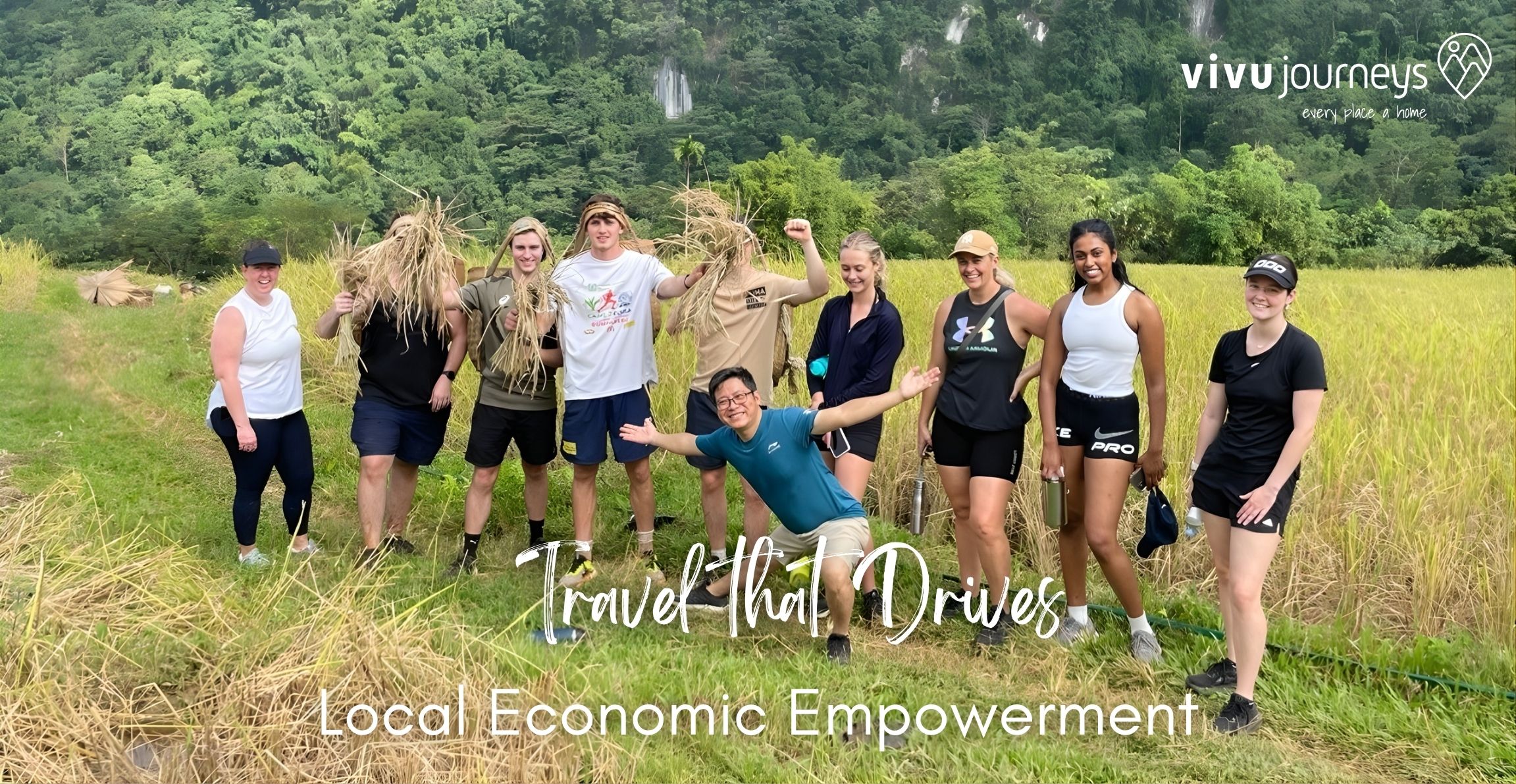
In destinations where economic opportunities are limited, we collaborate with residents to develop tourism experiences that incorporate everyday life, including homestays, shared meals, village-based activities, and cultural practices. Communities are supported in hosting visitors on their own terms, helping them generate income while preserving their local identity and way of life.

This approach creates shared value. Local people benefit from tourism that supports livelihoods and reinforces cultural continuity, while travellers gain authentic experiences and deeper cultural interaction through direct engagement rather than observation.
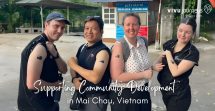
These projects also deliver value back to the community. Educational travel is embedded within community initiatives, linking student visits with contributions to locally identified priorities. Between 2024 and 2025, school-sponsored projects in Mai Chau and Ky Anh generated USD 137,024 in community contributions, which supported concrete infrastructure such as roads, community centres, and housing improvements in the villages.

Read more about our practical community-based projects:
2.3. Social Enterprises
By partnering with social enterprises, we can work directly with practices, materials, and knowledge that originate within communities, ensuring that cultural experiences shared with travellers are authentic, place-based, and not staged. These collaborations also reflect our wider concerns as a responsible travel operator, including environmental impact, cultural preservation, and inclusive livelihoods.
Through social enterprises, tourism becomes a channel to retain cultural integrity while creating meaningful local value.

2.4. Local Products and Services
Across our itineraries, we prefer locally produced goods and services, from food and accommodation to handicrafts and cultural experiences.
By strengthening local supply chains and encouraging travellers to make responsible purchasing choices, tourism spending is more likely to remain within the destination economy and support everyday livelihoods.

3. Economic Empowerment as a Bridge
For Vivu Journeys, supporting economic empowerment is the bridge between authentic travel experiences and resilient local livelihoods. Guests gain deeper, more meaningful connections with people and place. Local communities gain income, skills, and greater ownership of tourism development.
This is an ongoing journey, one that requires long-term collaboration with partners who share a commitment to travel for impact.
Partner with us and help communities thrive through sustainable tourism today.