

For tour operators and travel planners, the Cu Chi Tunnels remain one of the most consistently meaningful additions to a southern Vietnam itinerary, combining genuine historical depth with an experience that is difficult to replicate anywhere else in the region.

1. Cu Chi Tunnels History
The earliest sections of the Cu Chi Tunnels were dug in the late 1940s, during the resistance against French colonial rule. What began as a series of simple connecting passages gradually expanded over the following two decades as conflict in the region intensified.
By the height of the Resistance War against the U.S in the mid-1960s, Cu Chi District had become one of the most heavily bombed areas in the country. The tunnel network responded by growing deeper, wider, and more functional. At its peak, the system stretched for over 250 kilometres and supported an estimated 16,000 people living and working underground at any given time. Today, that long development – from the late 1940s through the Resistance War against the U.S – is what gives the Cu Chi Tunnels their particular historical weight.

Cu Chi District was one of the most heavily bombed areas during the resistance against French colonial rule. The tunnel network was both a direct response to that bombardment and a way of continuing organised life beneath it.
2. What Were the Cu Chi Tunnels Built For?
The Cu Chi Tunnels were built for continuity. They were the infrastructure that allowed an entire community to continue functioning when the surface world above them had become unlivable. At their most developed, the tunnels contained field hospitals, kitchens with underground smoke-dispersal systems, weapons workshops, command rooms, schools, and long-term sleeping quarters for fighters and civilians alike.
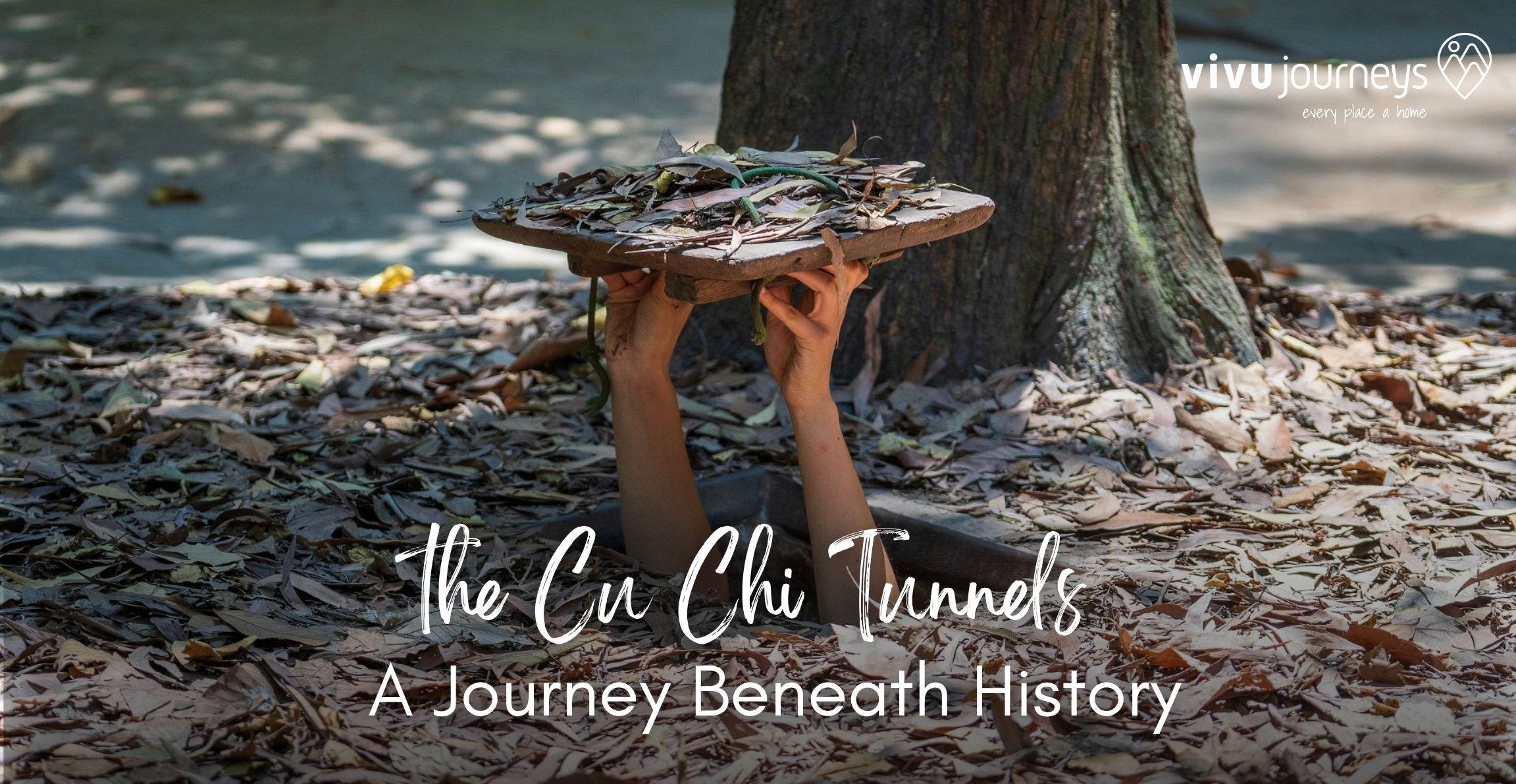
The engineering behind the system was remarkably resourceful. Cooking smoke was channelled horizontally through the earth and released far from the actual kitchen, making detection from the air almost impossible. Trapdoor entrances were fitted flush with the forest floor and covered with leaves, invisible to anyone walking past. Understanding what the tunnels were built for is what transforms a visit here from a historical tour into something considerably more affecting.

Reconstructed exhibits on site show how the tunnels functioned as an underground world beneath the enemy’s feet, where daily life and resistance were sustained below ground in the long struggle for independence.
3. What Visitors Experience Underground
The original tunnel passages were dug to fit the average frame of Vietnamese fighters in the 1960s, roughly 80 centimetres wide and 80 centimetres high. Entering one means crouching low and moving forward carefully through cool, still air, with earthen walls close on either side. Even the sections that have been widened for visitor access remain genuinely confined. The physical experience is part of the point.
Most visitors find it manageable in short stretches, and guides monitor the group attentively throughout. There are exit points along each tunnel section for anyone who needs to leave early. Travellers who prefer not to enter the tunnels at all can still access a full and meaningful visit through the site’s above-ground exhibits, preserved bomb craters, camouflaged entrances, and wartime displays.

Even the widened tourist sections of the tunnel give a clear sense of the original dimensions. Even the widened sections give visitors a clear sense of how confined the original tunnels were.
4. Planning Your Visit from Ho Chi Minh City
The Cu Chi Tunnels are most commonly visited on a half-day tour from Ho Chi Minh City, with the drive to the main visitor area at Ben Dinh taking around 1.5 hours from the city centre. A second site, Ben Duoc, sits further north and suits travellers who prefer a quieter, more in-depth experience with a full day available. Ben Duoc also includes a large war memorial and temple that is worth the extra travel time for the right visitor.

Early morning is the best time to arrive. The site opens at 7:30 am, the light is better for photography, and the atmosphere is noticeably calmer before the main group tours from the city begin to arrive. Light clothing, flat closed-toe shoes, and realistic expectations about confined spaces are the main practical considerations. The Cu Chi Tunnels pair naturally with a visit to the War Remnants Museum in Ho Chi Minh City for travellers who want a fuller picture of the war and its legacy in the south.
Ben Dinh is the closer and more accessible of the two visitor areas, well-suited to half-day tours from Ho Chi Minh City.
Read more about the Cu Chi Tunnels in one of our featured journeys: :https://vivujourneys.com/tour/14-day-authentic-vietnams-hidden-gems/
5. Explore Southern Vietnam with Vivu Journeys
Experience the Cu Chi Tunnels as part of a broader journey across Vietnam’s historical landmarks, cultural sites, and local stories.

Beyond Cu Chi, travellers can also explore other historical and cultural highlights:
- Ky Anh tunnels
- Reunification Palace
- War Remnants Museum
- Museum of Traditional Vietnamese Medicine
- Notre Dame Cathedral
- Central Post Office
These destinations are not only places to visit, but also opportunities to gain a deeper understanding of Vietnam’s history, appreciate its values, and build a stronger connection to the country.
You may also like:
https://vivujourneys.com/experience/cu-chi-tunnels-by-speedboat-river-road/
https://vivujourneys.com/local-legend/mr-kim-ta-huynh/
https://vivujourneys.com/tour/14-day-authentic-vietnams-hidden-gems/
Get in touch or partner with us to create thoughtfully tailored journeys across Vietnam.