



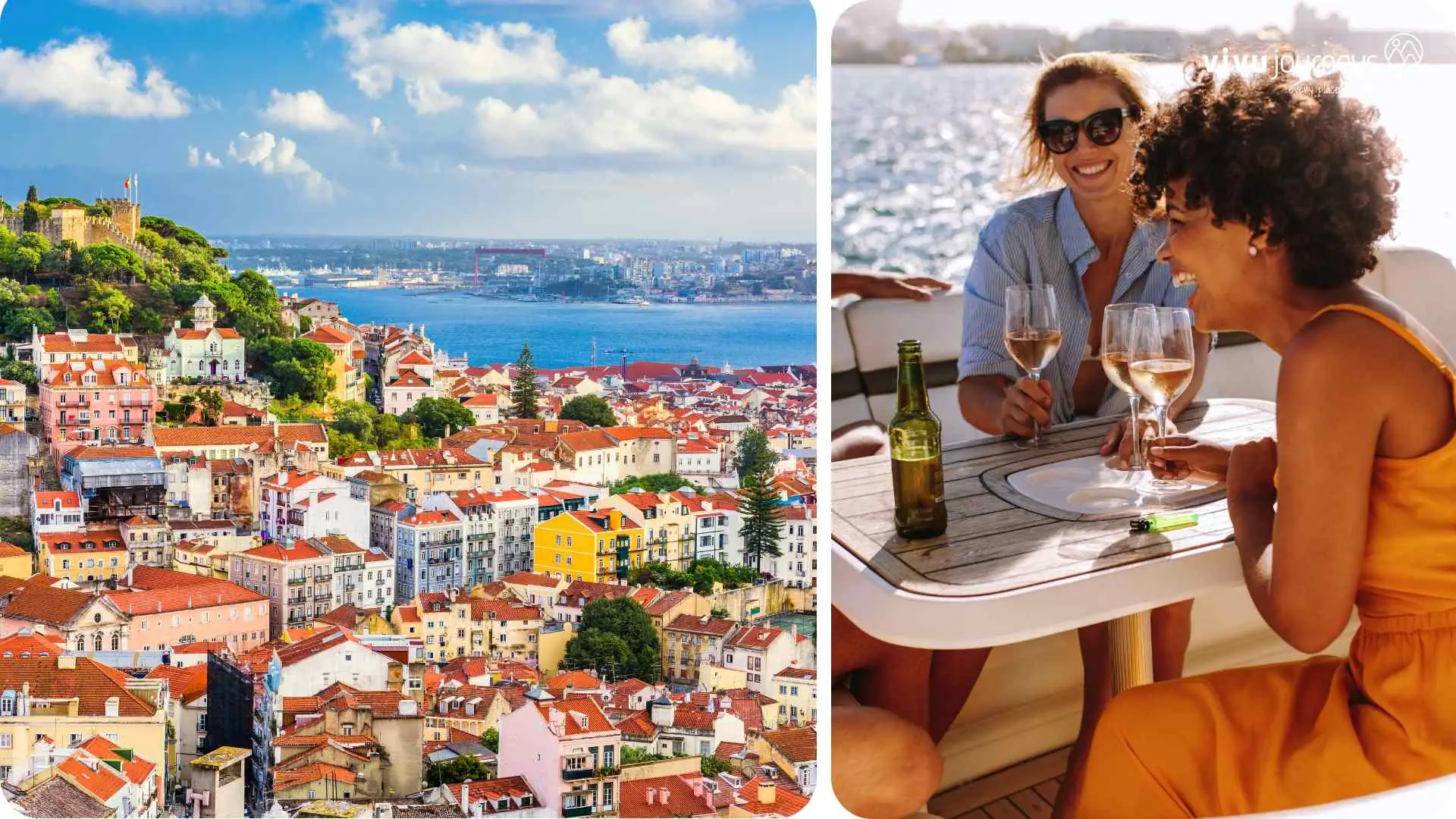
If you’re heading to Portugal, especially in the summer, Vinho Verde (‘Green Wine’) is a must-try. Distinguished by its high acidity, fruity and floral aroma, low alcohol content, and subtle carbonation, Vinho Verde is increasingly becoming popular worldwide.
Why ‘Green Wine’?

While some Vinho Verde has a greenish tint, it is a most often a white wine with some red and rose varieties available. The name most likely refers to the verdant area in northern Portugal bordering Spain where the grapevines are grown and the wine is produced. This region, known as Entre-Douro e Minho (between the Minho and Douro rivers), is Portugal’s largest wine region and Europe’s third. The granitic soil in this area gives the wine its mineral qualities and Vinho Verde grapes are considered to be exceptional at transmitting the terroir of the region.

The Vinho Verde region is divided into nine subregions, each with microclimates that allow for more than 45 grape varieties to thrive, many of which only exist in northwest Iberia. This diversity of grape varieties is actually a characteristic of Vinho Verde, creating a great range of flavours. While huge differences exist, white Vinho Verde is characterized as being refreshing and fruity.

Vinho Verde can also be translated as ‘young wine’ which might be another reason for its name. Vinho Verde is rarely aged in wood with the majority made in stainless steel vats. Bottles are generally released three to six months after harvest (unlike most other bottles that are often aged before going on sale) and are intended to be drunk young.
How to Drink Vinho Verde
Due to their high acidity, freshness, and low alcohol content, think light when pairing white and rose Vinho Verdes. These wines go well with starters, fish, and seafood dishes.

Reds are more difficult to pair as they are lighter bodied than most red wines. Pairing with traditional Portuguese food such as stews, duck rice, and suckling pig often goes well together.
Served chilled, Vinho Verde is perfect to drink on a warm summer evening in a Portuguese plaza, (especially after a long day of touring). Order a glass with a meal or on its own, often served with ‘petiscos’—small snacks such as a plate of olives. With its slight effervescence and generally low alcohol content, a glass of Vinho Verde leaves you refreshed and lets you have more than one!

Contact us at [email protected] to learn more about Vivu Journeys’ Experiences.