

Lucky money is one of the most recognizable and meaningful traditions during Vietnamese Tet, the Lunar new year in Vietnam. It symbolizes good fortune, warm wishes, and new beginnings.
1. What Is Vietnamese Lucky Money?
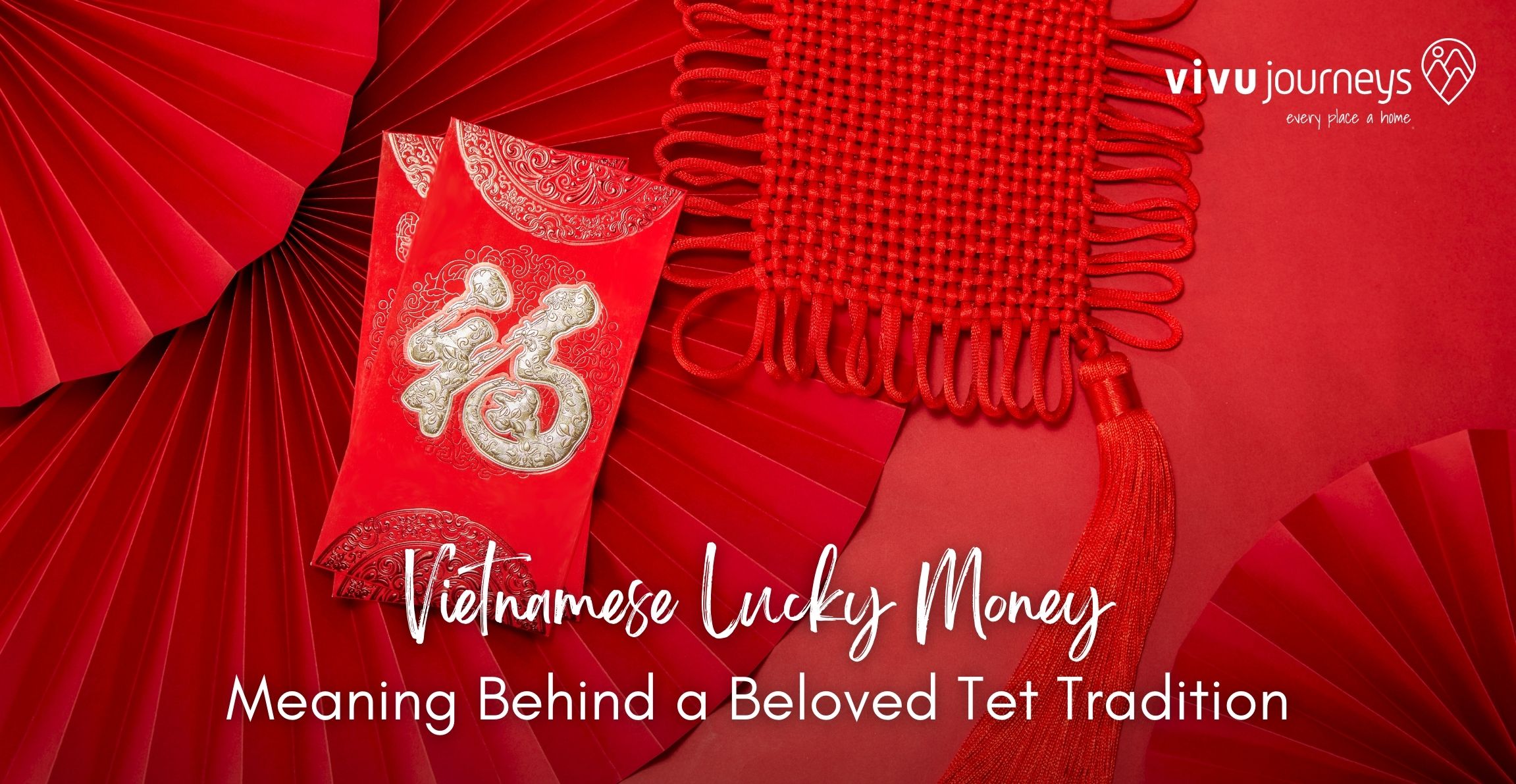
Lucky money, known in Vietnamese as “lì xì”, refers to money placed inside red envelopes and given during Tet. It represents wishes for luck, health, and prosperity, especially for children and elders.
During Vietnamese Tet, “lì xì” is typically exchanged from the first day of Tet, when families visit one another and share New Year greetings. The amount itself is less important than the intention behind it: offering a positive start and blessings for the year ahead.

2. The Cultural Meaning Behind Vietnamese Lucky Money
2.1. Why Red Envelopes Matter in “Lì Xì.”
Red is a powerful color in Vietnamese culture, symbolizing luck, happiness, and protection from bad fortune. This is why red envelopes are essential to Vietnamese lucky money. They are believed to carry positive energy and set a joyful tone for the year ahead.
The red envelope also transforms red envelopes from a simple monetary gift into a symbolic gesture deeply rooted in tradition.
Cultural facts: Alongside red, gold is also a popular color for lucky money envelopes, symbolizing wealth and prosperity. Today, lucky money designs now reflect personal luck, and also feng shui elements, adding a contemporary, colorful touch to this timeless Tet tradition.

2.2. “Lì Xì” Is More Than Just Money
In Vietnam, “lì xì” is often described as “giving luck” rather than giving cash. It conveys silent wishes: academic success for children, health and longevity for elders, and smooth journeys for working adults.
Within “lì xì” Tet, etiquette matters. Children are often taught not to open envelopes immediately, showing respect and gratitude to the giver – an important cultural value in Vietnamese Tet.
You might also like to know about Vietnamese culture:
3. How Vietnamese Lucky Money Is Given During Tet
3.1. Traditional Etiquette and Customs
Exchanging lucky money follows clear customs. Envelopes are given and received with both hands, accompanied by New Year wishes such as blessings for health, growth, or happiness.
In many regions, children are expected to clasp their hands, bow slightly, and offer Tet greetings to elders before receiving “lì xì”, reinforcing respect and family values at the heart of Vietnamese Tet.

3.2. Who Gives “Lì Xì” During Tet?
Traditionally, married adults and elders give “lì xì” to children and unmarried younger relatives. In return, younger family members may offer symbolic New Year wishes or small gifts to elders as a sign of respect.
A familiar Tet scene unfolds on the morning of the first day of the new year: cousins and siblings lining up eagerly, waiting their turn to receive lucky money. This joyful queue, filled with laughter and excitement, becomes a memorable and heartwarming image of family togetherness during the Tet celebration.

4. Vietnamese Lucky Money in Modern Life
In modern times, “lì xì” has evolved alongside technology. Bank transfers and digital wallets are now common, especially for families living apart. Many apps allow users to send Vietnamese “lì xì” along with online greeting cards and personalized New Year messages, helping bridge the distance between family members living far from home.
Even so, during the Lunar New Year in Vietnam, handing over a red envelope in person remains deeply meaningful. The warmth of face-to-face exchanges and spoken blessings is something that is difficult for technology to fully replace.
Experience Vietnam in spring – the most beautiful season of the year – with selected excursions from Vivu Journeys:
Within Vietnamese Tet, lucky money is far more than a festive custom. It reflects shared values, respect across generations, and hopes for a prosperous new year. Through each red envelope, Vietnamese families preserve a tradition where emotional meaning outweighs material value, keeping the spirit of Tet alive across generations.
To take a deeper step into Vietnamese culture. Enquire now, or become our partner today!