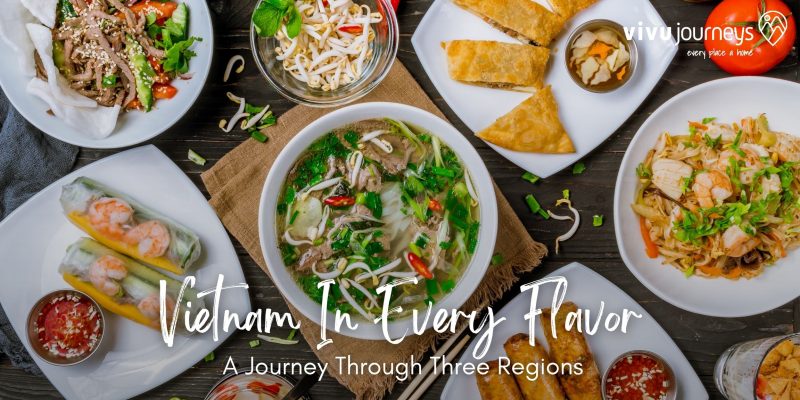

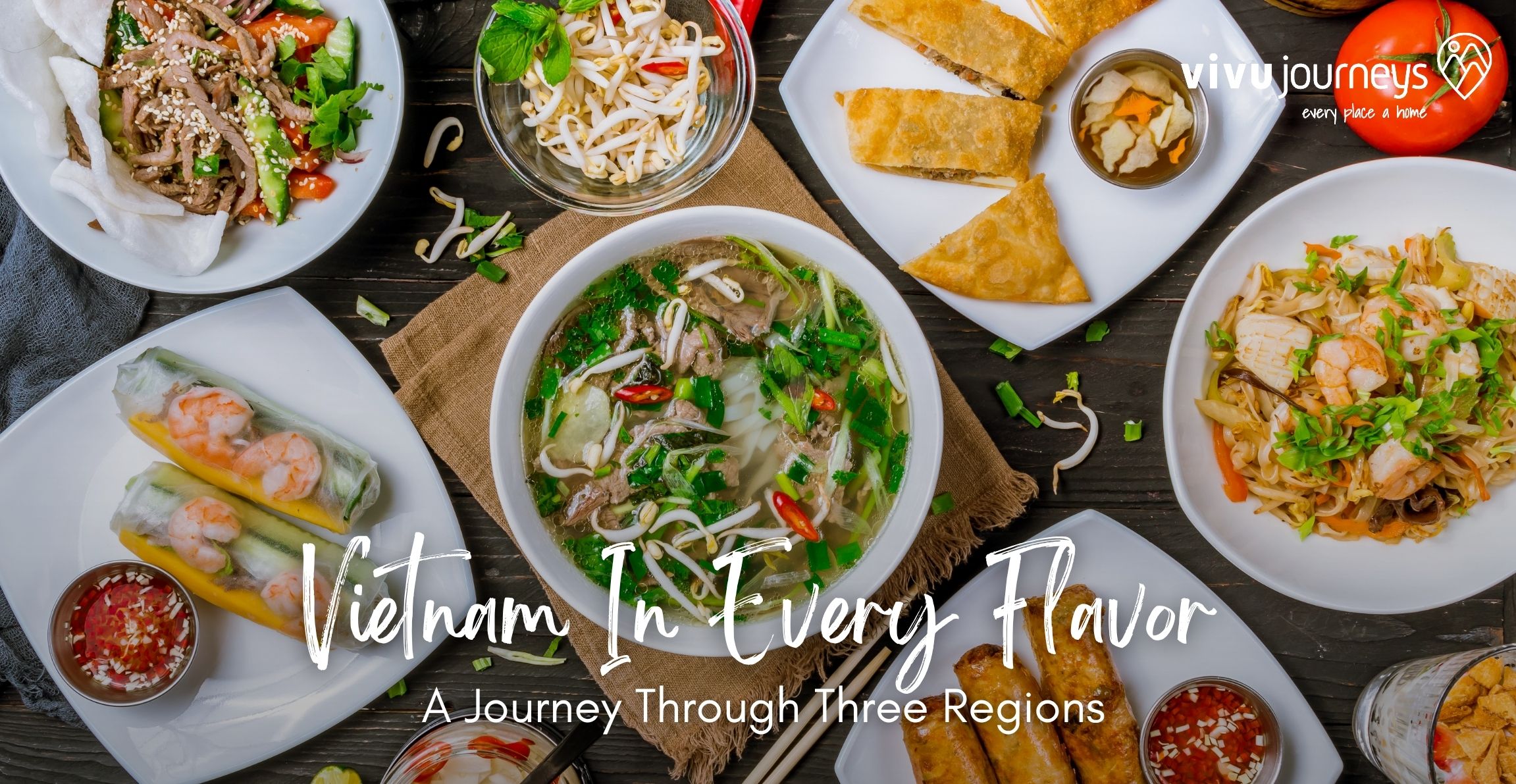
Vietnamese cuisine is one of the most memorable ways for travellers to connect with the country’s culture, traditions, and local life. From mountain villages and vibrant city streets to coastal tables, each region reveals its own story through local ingredients, cooking styles, and the people behind every meal.
1. What Makes Vietnamese Cuisine So Unique?
Vietnamese cuisine stands out for its regional variety, balanced flavors, and strong connection to daily life. It is not defined by one signature dish or one cooking style. As travellers move through the country, food in Vietnam changes with the climate, landscape, history, and local traditions of each destination.

Northern cuisine is often light and subtle, with clean flavors that let the main ingredients stand out. Central Vietnam is usually bolder and more layered, with stronger seasoning and gentle heat. Southern dishes feel richer, sweeter, and more generous. Together, these contrasts make culinary travel in Vietnam varied, memorable, and full of character.
2. Northern Vietnamese Cuisine Experiences
2.1. Highlands Flavors
Food in Northern Vietnam’s highlands has a rustic and earthy character. In places such as SaPa, Ha Giang, Mai Chau, and Pu Luong, meals often reflect the cool mountain climate and the food traditions of ethnic communities. Common highlights include smoked buffalo or pork, bamboo-tube rice, wild herbs, and forest vegetables.

What makes this experience special is the setting behind the food. Travellers may taste grilled meats beside a village market, share a meal in a stilt house, or try dishes made with ingredients gathered from nearby fields and forests. Many flavors are smoky, herbal, and hearty, giving highland cuisine in Northern Vietnam a very unique identity.
Local insight tip: Highland culinary experiences are best designed as slow, hosted moments. They work well with local market visits or stays in mountain lodges, where food becomes part of the wider story of landscape.
Learn more: Unique Experiences in SaPa That Are Beyond the Viewpoints
2.2. Hanoi Classics and Red River Delta Specialties
Hanoi and the Red River Delta are essential for travelers who want to understand classic northern Vietnamese cuisine. This is where many iconic dishes are rooted, including “phở”, “bún chả”, “bánh cuốn”, “cốm” and egg coffee. The food here is known for clean flavors, and dishes that often feel simple at first but reveal depth through broth, sauces, and texture.

A well-designed food experience works best when it follows the rhythm of local life. Travelers might start with a noodle breakfast, visit a morning market, or sit down for coffee in a hidden café. These moments help travelers understand how food is woven into everyday routines, not only served as a dining experience.
Local insight tip: For a smoother experience, plan Hanoi food routes by time of day. Breakfast dishes, lunch favorites, and evening street food each have their own rhythm, so the best stops are often not available all day.
Learn more:
- Unique Experiences in Hanoi: An Agent’s Guide to Tailor-Made Journeys
- Vietnamese Coffee: History, Unique Brewing & Regional Favorites
- Top 5 Things to Do in Hanoi for Drink Lovers
2.3. Bay & Coastal Bites
Northern Vietnam’s coastal destinations bring a fresher and more relaxed side to the region’s cuisine. Travelers can discover local highlights such as grilled shellfish, squid cakes, crab noodle soup, and seafood hotpot. In Hai Phong, dishes often feel more robust and flavorful, while bay destinations are ideal for lighter seafood meals paired with scenic cruising.

Bay and coastal dining add a refreshing contrast to Hanoi’s street food and the highlands’ hearty mountain meals. This type of experience is ideal for customers who prefer fresh seafood, slow pacing, and a strong sense of place.
Local insight tip: To create a more memorable coastal cuisine experience, pair seafood dining with the right setting. Enjoying seafood near a local harbor, fishing village, or quiet waterfront can feel more authentic than a standard restaurant stop.
3. Central Vietnamese Cuisine Experiences
3.1. Imperial Cuisine of Hue
Hue is a must for travellers interested in the cultural depth of Vietnamese cuisine. As Vietnam’s former imperial capital, Hue is known for refined dishes, elegant presentation, and careful attention to balance. Flavors are often more layered than in the north, with gentle heat, fragrant herbs, and careful seasoning.

Signature dishes such as “bún bò”, “bánh bèo”, “bánh nậm”, “bánh bột lọc”, and royal-inspired set menus reflect the city’s rich culinary heritage. Many dishes are served in small portions, allowing travelers to taste a wide variety of flavors and textures in one meal, from soft and silky to chewy, spicy, savory, and fresh.
Local insight tip: Hue’s imperial cuisine works best as a cultural experience, not just a meal. Paired with the Imperial City, garden houses, or traditional music, it creates a natural link between history, setting, and food.
3.2. Heritage Flavors of Hoi An
Hoi An’s cuisine reflects its trading history, riverside setting, and strong local food traditions. The flavors are often bright, savory, and gently aromatic, with fresh herbs, rice noodles, and house-made sauces. Travelers can discover signature dishes such as “cao lầu”, “mì Quảng”, white rose dumplings, “bánh xèo”, and local rice cakes.

The compact layout, photogenic streets, and rich food culture in Hoi An make it easy to design culinary experiences that feel immersive but comfortable. For many travelers, this is where regional Vietnamese food becomes especially memorable because the setting is as engaging as the meal.
Local insight tip: Choose family-run eateries or small workshops where travelers can learn the story behind dishes for more local connection.
Learn more: Authentic Ways to Discover Hoi An Beyond the Ancient Town
3.3. Seafood by the Lagoon
The long coastline and lagoon systems in Central Vietnam create excellent opportunities for seafood-focused experiences. In areas such as Lang Co, Tam Giang Lagoon, Da Nang, Quy Nhon, and Nha Trang, local meals reflect fishing traditions, fresh daily catch, and the calm atmosphere of life by the water.

A lagoon-to-table experience can include learning about local fishing life, visiting a seafood market, or enjoying a relaxed meal near the water. Fresh prawns, clams, fish, squid, and local dipping sauces can be served in a way that feels authentic and strongly connected to place.
Local insight tip: For tailor-made journeys, seafood by the lagoon adds variety and atmosphere. It can work as a scenic lunch, or a relaxed evening experience after cultural sightseeing.
4. Southern Vietnamese Cuisine Experiences
4.1. Saigon Street Eats
Saigon or Ho Chi Minh city is one of Vietnam’s most exciting destinations for street food and social dining. The city’s food scene feels lively, diverse, and full of contrast, with flavors that are often bold, generous, and easy to enjoy.

Signature dishes for travelers to explore include “cơm tấm” and “hủ tiếu”. Evening food experiences work especially well, as markets, local eateries, cafés, and casual dining streets bring the city’s energy to life. Exploring Saigon street food cuisine is ideal for visitors who want variety, atmosphere, and a more modern view of food in Vietnam.
Local insight tip: Curate Saigon street food routes carefully. Trusted stops, comfortable transfers, and a good local guide help guests enjoy the city’s energy without feeling overwhelmed.
4.2. Mekong Garden Flavors
In the Mekong Delta, Vietnamese cuisine feels slower, warmer, and closely tied to river life. Meals often bring together freshwater fish, coconut, tropical fruit, garden vegetables, and local herbs. This creates flavors that are fresh, generous, and naturally abundant.

Local meals often highlight the balance of sweet, sour, salty, and spicy flavors. Travelers may taste dishes such as caramelized fish cooked in clay pot, sour soup “bánh xèo” filled with prawns, bean sprouts, and herbs. Tropical fruits, coconut-based sweets, rice paper, and fresh herbs also bring a strong sense of place to the table.
Local insight tip: Mekong culinary experiences work best when they feel personal and unhurried. A home-hosted lunch, fruit tasting, local market stop, or gentle boat journey can turn a meal into a warm cultural encounter, with stories of family life, farming traditions, and seasonal produce adding depth to the experience.
4.3. Island Seafood Trails
Southern Vietnam’s islands and coastal escapes offer another side of Vietnamese cuisine. Phu Quoc, Con Dao, and nearby coastal areas are known for seafood, fish sauce heritage, pepper farms, local markets, and island-style dining.

Travellers can explore fresh seafood markets, enjoy grilled seafood by the beach, visit a pepper farm, or learn about traditional fish sauce production. These experiences are especially suitable for itineraries that combine relaxation with local discovery.
Local insight tip: For island stays, add one light culinary stop instead of a full food-heavy program. A seafood market visit, pepper farm, or fish sauce experience can give travellers a stronger sense of place while keeping the beach extension relaxed.
5. Signature Vietnamese Cuisine Experiences Beyond the Plate
5.1. Join a Vietnamese Cooking Class
A Vietnamese cooking class remains a popular experience, but it should be designed thoughtfully. The best classes go beyond simply following a recipe. They introduce local ingredients, cooking techniques, family traditions, and the cultural meaning behind each dish.

Depending on the destination, classes can focus on Hanoi dishes, Hue specialties, Hoi An market cuisine, Mekong home cooking, or seafood recipes. For travelers who enjoy hands-on learning, this can be a memorable way to connect with local cuisine in Vietnam.
5.2. Visit Local Markets with a Chef
A market visit with a chef or local food expert can add strong cultural value to a culinary itinerary. Travelers can learn how ingredients are selected, how herbs are used, why certain dishes are seasonal, and how local shopping habits shape Vietnamese meals.

This type of experience works well in many destinations including Hanoi, Hoi An, Hue, Saigon, and the Mekong Delta. It can be included before a cooking class, a tasting route, or a hosted meal. For customers who may not want a fully hands-on activity, a chef-led market visit can still feel immersive. It offers color, interaction, photography opportunities, and local insight without requiring a long cooking session.
5.3. Farm-to-Table Dining
Farm-to-table dining is a natural fit for Vietnam, where many regions are closely connected to agriculture, rivers, and seasonal produce. These experiences are especially appealing for travelers who care about fresh ingredients, responsible travel, and a slower pace.

A well-designed farm-to-table experience should feel authentic rather than staged. The value comes from the setting, the local hosts, the ingredients, and the story of how food connects to the land.
6. How to Add Vietnamese Cuisine Experiences Into Tailor-Made Itineraries
6.1. Design Around Traveller Preferences
Not every traveller wants the same type of culinary experience. Some may enjoy lively street food walks, while others prefer seated tastings, private dining, home-hosted meals, or market visits.
When designing culinary travel in Vietnam, consider:
- Comfort and mobility: Choose walkable routes, seated stops, or private transfers for guests who prefer a slower pace.
- Food confidence: Start with familiar dishes such as “phở”, “bánh mì”, or fresh spring rolls before introducing stronger regional flavors.
- Local interaction: Use home-hosted meals, chef-led markets, or family-run eateries for customers who want deeper cultural connection.
- Group size: Smaller groups work well for markets and street food, while larger groups may need curated tastings or private dining venues.
- Travel experience: First-time visitors may enjoy Hanoi classics and Saigon street eats, while repeat travellers may appreciate highland meals, lagoon seafood, or Mekong garden dining.
Instead of adding too many food activities, include a thoughtful mix such as one street food experience, one hosted meal, one market visit, and one refined dining moment. This allows travellers to discover Vietnamese cuisine from different angles without feeling overloaded.
6.2. Add Value Through Local Expertise
Vietnam is one of Southeast Asia’s most rewarding destinations for culinary travel. From delicate northern flavors to refined central specialties and generous southern dishes, Vietnamese cuisine offers a rich journey through regional taste, local ingredients, and everyday culture.

Culinary moments can feel more authentic, meaningful, and well-curated with the right local expert insight. Vivu Journeys supports travel partners by curating cuisine experiences that match each customer preference. Enquire now or partner with us to create Vietnamese culinary adventures that feel authentic, seamless, and connected to the destination.