

Vietnamese coffee is not just a caffeine fix; it is a living expression of place, pace, and Vietnamese culture. From the slow drip of a phin filter to regional icons like egg coffee, Vietnamese coffee culture truly reflects Vietnam’s history, climate, and creativity in every sip.
1. When Did Vietnamese Coffee Start?
Coffee is widely believed to have been introduced to Vietnam in the mid-19th century, around 1857. Early plantations followed later in the late 1800s.
In the early 20th century, coffee production expanded into the Central Highlands, where the region’s fertile soil and favourable climate proved ideal for cultivation. This expansion helped shape the geography of Vietnam’s coffee-growing regions, which continues to define the industry today.

2. What Makes Vietnamese Coffee Special?
Coffee experiences in Vietnam are deeply connected to the landscape. Highlands, volcanic soils, and seasonal climates are not just background details. They are part of what gives Vietnamese coffee its signature strength and character. Three main factors help explain why it tastes so unique.
2.1. The Coffee Bean Factors
There are two famous coffee beans in Vietnam: Robusta (Coffea canephora) and Arabica. Robusta dominates national production and is prized for its bold body, strong flavour, and naturally higher caffeine content. It is most widely grown in Vietnam’s Central Highlands (Tây Nguyên), where warm temperatures, basalt soils, and broad plantations support high yields and bold flavour.
Arabica, on the other hand, grows in cooler and higher areas such as Lâm Đồng and Đà Lạt. It has a lighter, more aromatic taste and is produced in smaller quantities.
Together, these beans help explain why Vietnamese coffee often tastes rich, strong, and chocolatey, especially when brewed with a phin filter and served over ice.

2.2. The Phin Filter
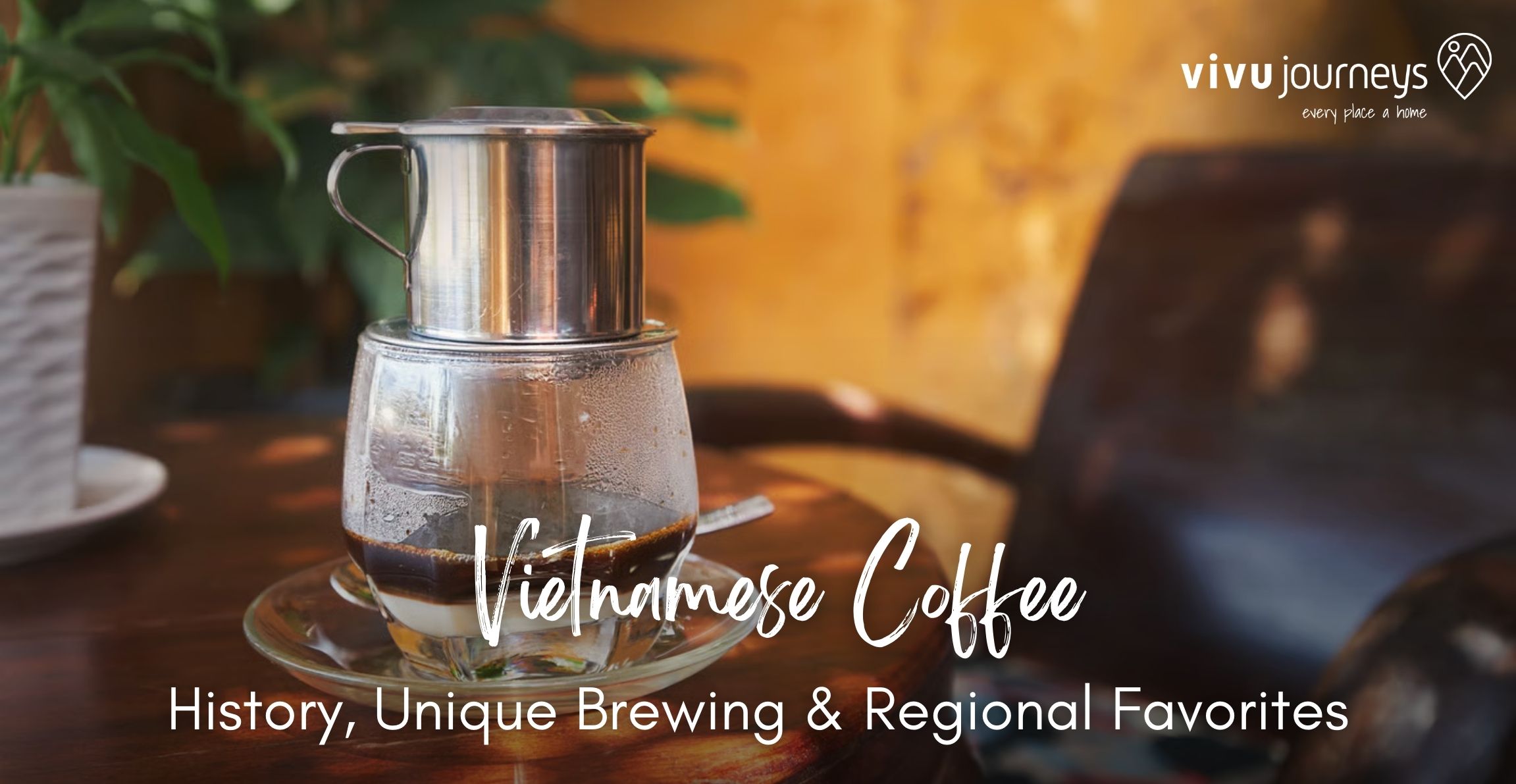
If you want to understand Vietnamese coffee culture, let’s start with the phin. Vietnamese coffee is often slow-sipped and social, and the phin’s drip time becomes part of the moment.
A phin brew typically lands between espresso-like intensity and the cleaner profile of pour-over, delivering a concentrated cup that encourages you to pause. This slow rhythm is one reason coffee in Vietnam feels like a daily ritual, not a rush.

2.3. Condensed Milk Innovation
Many classic Vietnamese coffees pair this strong brew with sweetened condensed milk, creating a rich, dessert-like balance that suits Vietnam’s heat, especially iced.
Even the vocabulary changes by region. For iced coffee with condensed milk, Northerners typically say “nâu đá” while Southerners call it “cà phê sữa đá”.

This condensed milk pairing is one reason visitors often call it the best Vietnamese coffee experience: bold coffee, creamy sweetness, and a refreshing finish that works brilliantly in tropical weather.
3. Regional Favourites Across Vietnam
One of the joys of travelling in Vietnam is ordering coffee in different cities and tasting how local culture shows up in every cup. This indicates that the diversity of Vietnamese coffee also depends on the signature taste of each Vietnamese region.
3.1. Hanoi and the North
Hanoi is the spiritual home of egg coffee “cà phê trứng”, a silky, custard-topped treat that feels like dessert in a cup. The texture is the point: airy, rich, and warming, especially on cool northern mornings.
For travellers who want the story behind the drink, some experiences go beyond ordering at the counter. In Hanoi, guests can even be welcomed by the family of local legend Mr Khoa, whose family is closely linked to the origins of the city’s iconic egg coffee recipe.

If you are building a coffee-themed itinerary, Hanoi is also where you will feel the social side of Vietnamese coffee culture most clearly: cafés as meeting points, long conversations, and a steady drip marking time.
Find more highlights drinking spot in Hanoi at: Top 5 Things to Do in Hanoi for Drink Lovers
3.2. Central Vietnam
Central Vietnam adds its own creative touch to the country’s coffee culture. Coconut coffee “cà phê dừa” is one of the region’s most popular drinks, combining strong Vietnamese coffee with coconut cream for a smooth and refreshing flavour.
This drink is especially popular in central and southern cafés and is a great choice for travellers who prefer something creamy, refreshing, and slightly less intense than traditional black coffee.

In Huế, try salt coffee “cà phê muối”. It adds a subtle savoury lift to sweetness, creating a surprisingly balanced cup that feels both modern and rooted in local taste.
Central Vietnam also connects you to the wider coffee landscape. The Central Highlands, “Tây Nguyên”, are described as Vietnam’s coffee heartland, where altitude, volcanic soils, and seasonal climate suit Robusta. If you are curious about Vietnamese coffee beans beyond the café, this is where origin stories come alive.
Read more about Vietnamese salt coffee at: Salt Coffee in Vietnam: The Hue Original
3.3. Southern Vietnam
In southern Vietnam, coffee culture is closely linked to “cà phê sữa đá”, the famous iced coffee with condensed milk. Another popular drink is “bạc xỉu”, which contains more milk and only a little coffee, making it sweeter and lighter.
Ho Chi Minh City is also a great place to move from tasting to doing. Guests can take part in a hands-on workshop preparing three iconic Vietnamese coffees using traditional phin methods and everyday local ingredients. Guided by experienced local instructors, the process transforms observation into participation, which is practical, sensory, and memorable.
If your goal is to experience the best Vietnamese coffee through skill and context, a workshop like this helps you understand why the method matters as much as the ingredients.

Read more about the coffee workshop in HCMC at: A Taste of Vietnam-Coffee Workshop
4. Coffee as Cultural Identity in Vietnam
To understand Vietnamese coffee culture history, it helps to see coffee not as a trend, but as a daily language. Vietnamese coffee is often slow-sipped and social. The act of waiting for a phin to drip creates a shared pause, whether you are on a plastic stool in an alleyway or in a design-led café.

Coffee also reflects Vietnam’s talent for adaptation. Condensed milk solved practical constraints and matched the climate, turning strong coffee into something balanced and travel-friendly.
Regional innovations like egg coffee, coconut coffee, and salt coffee show how tradition stays alive by evolving. And for travellers, coffee becomes a direct route into local life. Understanding a culture starts with meeting the people who sustain it. When you sit down for Vietnamese-style coffee, you are not just ordering a drink. You are stepping into a rhythm that has shaped conversations, neighbourhoods, and everyday routines for generations.
5. Conclusion
If you want to go beyond the checklist and truly understand Vietnam through taste, make coffee part of your journey. Try Robusta-forward brews, learn the phin ritual, compare regional signatures, and ask the story behind the cup.

For deeper insights about Vietnamese culture and travel, enquire now, or become our partner today!