


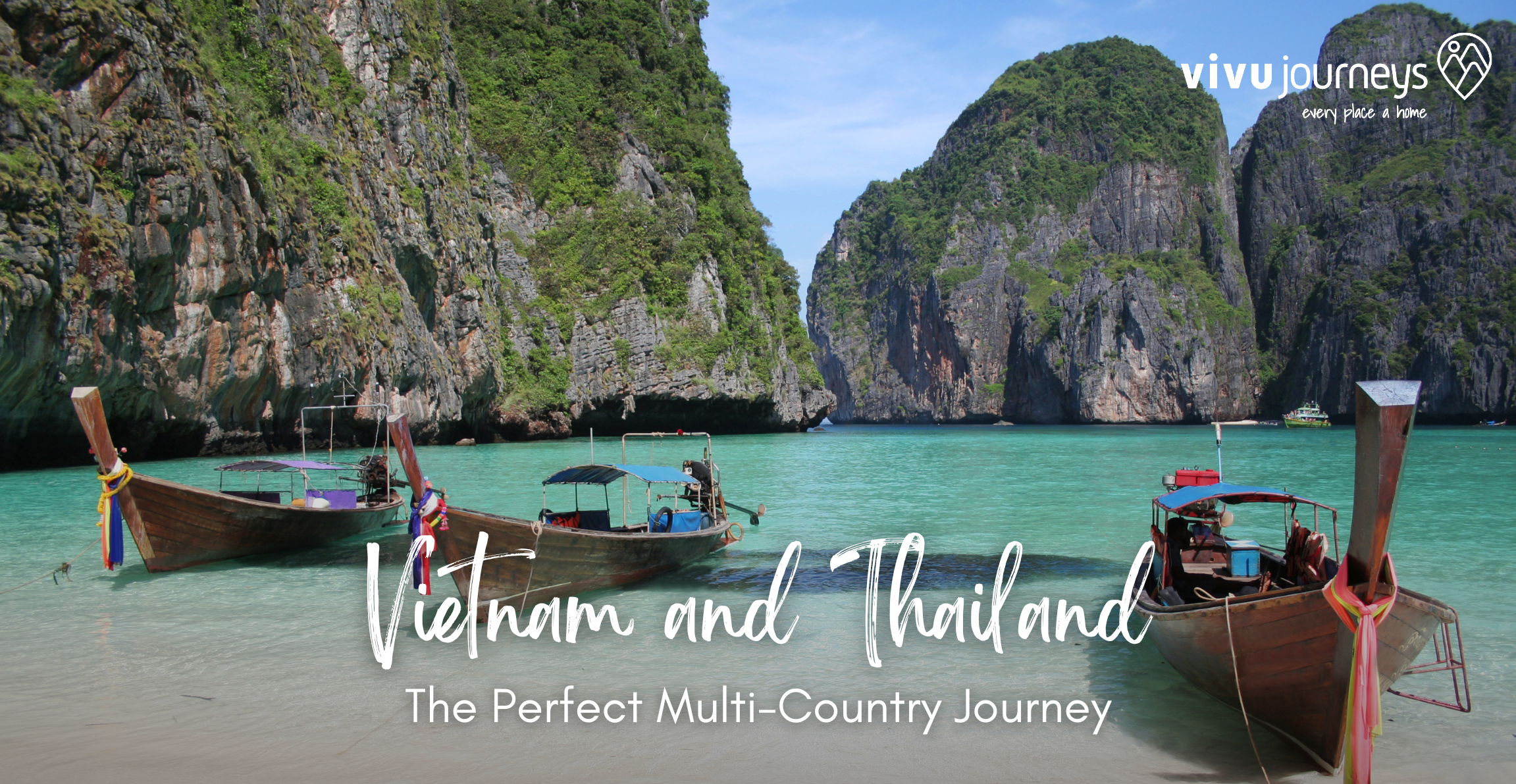
A well-designed Vietnam and Thailand itinerary combines two of Southeast Asia’s most rewarding destinations in one seamless journey. Vietnam brings layered history, atmospheric cities, dramatic bays and river landscapes, while Thailand adds gilded temples, energetic urban life and restorative beaches. With thoughtful routing and balanced pacing, travel partners can create a multi-country programme that feels varied, efficient and easy to enjoy.
Why Vietnam and Thailand Work So Well Together

Vietnam and Thailand are strong standalone destinations, but combining them creates a journey with greater variety and broader market appeal. Each country has a distinct identity, yet their geographical proximity and regional transport networks make them practical to include within the same programme.
Complementary Landscapes
A Vietnam and Thailand trip introduces travelers to a remarkable variety of landscapes within one regional journey. Vietnam offers the limestone karsts of Ha Long Bay, the mountains of the north and the waterways of the Mekong Delta, while Thailand adds tropical islands, sandy beaches and the forested regions of Chiang Mai or Khao Sok.
Rather than overlapping, these landscapes complement one another. Ha Long Bay contrasts with the coastal leisure of Phuket or Krabi, while the Mekong Delta’s river communities are balanced by northern Thailand’s mountains, tea plantations and Lanna heritage. This diversity allows each destination to maintain its distinct character.
Diverse Cultural Experiences

Although Vietnam and Thailand share regional influences, their cultural identities are distinctly different.
Vietnam showcases Hanoi’s historic quarters, Hue’s imperial heritage, Hoi An’s merchant architecture and Ho Chi Minh City’s vibrant urban culture. Thailand complements this with Bangkok’s royal landmarks, Buddhist temples, local markets and Chiang Mai’s northern traditions. Food also enriches the journey, combining Vietnamese street food and market visits with Thai cooking classes, Chinatown walks and community dining experiences.
Easy Regional Connectivity
Vietnam and Thailand are connected by frequent regional flights, with direct services linking Bangkok to Hanoi, Ho Chi Minh City and Da Nang.
This makes open-jaw itineraries easy to arrange. Travellers can arrive in Hanoi, journey through Vietnam, fly from Ho Chi Minh City to Bangkok, and depart from Phuket. This helps clients to have a smoother itinerary with minimal backtracking and greater flexibility.

Flexible Trip Lengths
A combined Vietnam and Thailand itinerary can be adapted to different markets, budgets and travel styles.
Seven-day programmes can focus on key cities and a natural highlight, while 14- or 21-day journeys allow travellers to explore multiple regions at a comfortable pace. The itinerary suits first-time visitors, repeat guests, FITs, groups and specialist interests including food, culture, wellness, soft adventure and responsible travel.
Recommended Ways to Build a Vietnam and Thailand Itinerary
The most successful multi-country journeys are not necessarily those with the greatest number of stops. A strong itinerary connects destinations logically, gives each location a clear role and includes enough unstructured time for travelers to absorb the experience.
1. Choose an Itinerary That Fits the Trip Duration
The duration of the trip should determine the number of destinations, rather than attempting to compress a long wish list into a limited schedule.
7 Days: Hanoi – Ha Long Bay – Bangkok

A seven-day Vietnam and Thailand itinerary offers an ideal introduction to two of Southeast Asia’s most iconic destinations. The journey begins in Hanoi, where travellers can discover the Old Quarter, historic landmarks and local culinary traditions before continuing to Ha Long Bay for an overnight cruise among its UNESCO-listed limestone karsts. From Hanoi, a direct flight to Bangkok creates a seamless transition into Thailand, with time to explore the city’s royal heritage, renowned temples, vibrant neighbourhoods and diverse dining scene.
Suggested itinerary:
- Days 1–2: Hanoi
- Days 3–4: Ha Long Bay and return to Hanoi
- Days 5–7: Bangkok
With only three key destinations, this itinerary balances culture, nature and urban experiences while keeping transfers and hotel changes to a minimum.
14 Days: Ho Chi Minh City – Mekong Delta – Bangkok – Phuket

A two-week itinerary allows travellers to experience Vietnam and Thailand at a more relaxed pace while combining culture, local life and coastal leisure. The journey starts in Ho Chi Minh City before continuing into the Mekong Delta, where guests can choose from riverside lodges, community experiences or overnight cruises. A direct flight then connects to Bangkok for its cultural landmarks and authentic local neighbourhoods, before the journey concludes with several days of relaxation on Phuket’s beaches or nearby islands.
Suggested itinerary:
- Days 1–3: Ho Chi Minh City
- Days 4–5: Mekong Delta
- Days 6–9: Bangkok
- Days 10–14: Phuket
See more: Mekong Delta: 5 Unique Expriences to Explore
21 Days: Hanoi – Ha Long Bay – Hue – Hoi An – Bangkok – Chiang Mai – Krabi

A 21-day Vietnam and Thailand itinerary offers the flexibility to explore both countries in greater depth without rushing between destinations. After experiencing Hanoi and Ha Long Bay, the journey continues through central Vietnam, where Hue and Hoi An showcase imperial heritage, local cuisine and traditional craftsmanship. From Da Nang, travellers can fly directly to Bangkok before heading north to Chiang Mai for its temples, markets and Lanna culture, finishing with several days of leisure on the beaches of Krabi or Phuket.
Suggested itinerary:
- Days 1–3: Hanoi
- Days 4–5: Ha Long Bay
- Days 6–7: Hue
- Days 8–10: Hoi An
- Days 11–13: Bangkok
- Days 14–17: Chiang Mai
- Days 18–21: Krabi or Phuket
Designed for premium FITs and long-haul travelers, this itinerary combines cultural discovery with slower-paced travel. Including free time throughout the programme helps create a more comfortable journey and allows travelers to experience each destination more naturally.
See more: Hoi An Through Its Flavour: Unique Dining Experiences
2. Plan Efficient Travel Routes Between Vietnam and Thailand
Well-planned transport is essential for a smooth Vietnam and Thailand itinerary. Combining direct flights, strategic road transfers and selected water journeys helps reduce travel time while maximizing the overall experience.

Use Direct Flights Between Vietnam and Thailand
Direct flights are the most efficient way to travel between the two countries. Hanoi, Da Nang and Ho Chi Minh City all offer convenient connections to Bangkok, allowing itineraries to flow naturally from north, central or southern Vietnam. Whenever possible, schedule international flights after a comfortable transfer rather than immediately following a cruise or long road journey.
Fly Between Thailand’s Key Regions
Domestic flights are the fastest way to travel between Bangkok, Chiang Mai, Phuket and Krabi. They minimize travel time and make it easier to combine Thailand’s cultural, mountain and beach destinations within one itinerary.
Use Road Transfers for Nearby Destinations
Road travel works best for shorter regional routes where the journey adds value. Popular examples include Hanoi–Ha Long Bay, Hue–Hoi An and Ho Chi Minh City–Mekong Delta in Vietnam, as well as Bangkok–Ayutthaya and Phuket’s surrounding coastal areas in Thailand.

Include Water Journeys as Part of the Experience
Water travel can become a highlight rather than simply a transfer. An overnight Ha Long Bay cruise or a Mekong Delta river experience adds variety before continuing to Thailand, while ferries and island boats create seamless connections between Thailand’s coastal destinations. Allow sufficient flexibility, as sailing schedules may vary with weather and season.
3. Balance Culture, Nature and Leisure Experiences
The best Vietnam and Thailand itineraries combine cultural discovery, natural landscapes and leisure experiences in a well-paced journey. Alternating between these elements keeps the program engaging while avoiding travel fatigue.

Start with Cultural Experiences
Begin in destinations such as Hanoi, Hue or Hoi An before continuing to Bangkok or Chiang Mai. Alongside iconic landmarks, include local markets, neighbourhood walks, cooking classes or artisan workshops to create more authentic cultural connections.
Add Nature Between Cities
Natural landscapes provide a refreshing contrast to urban exploration. Ha Long Bay and the Mekong Delta are ideal additions in Vietnam, while Chiang Mai’s countryside, Phuket and Krabi offer opportunities for mountains, beaches and island experiences. Leaving time to relax between activities helps maintain a comfortable pace.
End with Leisure
Concluding the itinerary with a beach stay in Phuket, Krabi or another island destination allows travelers to unwind before their journey home. Optional experiences such as spa treatments, private boat trips or free beach time create flexibility while ending the trip on a relaxing and memorable note.
How Vivu Journeys Supports Multi-Country Programs

With more than 30 years of destination management experience, Vivu Journeys delivers seamless multi-country travel through coordinated local expertise and on-the-ground operations. We work with travel partners to create customied itineraries for FITs, groups and specialized travel programs, balancing efficient logistics with authentic local experiences.
A well-designed Vietnam and Thailand itinerary should feel like one connected journey rather than two separate holidays. Partner with Vivu Journeys to create tailored multi-country programmes with trusted local expertise and reliable operational support from planning through delivery.