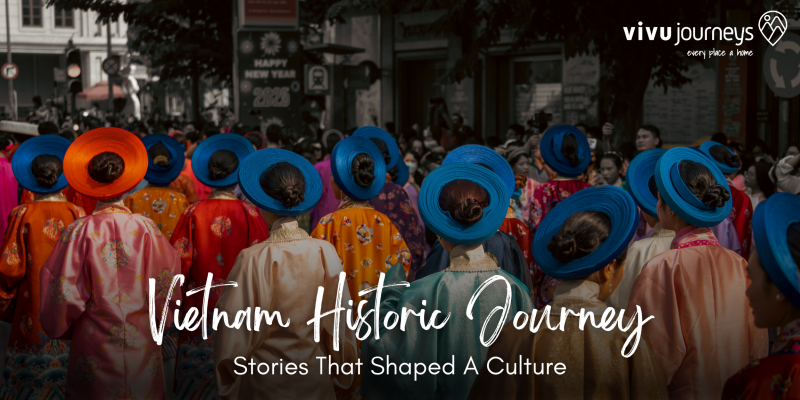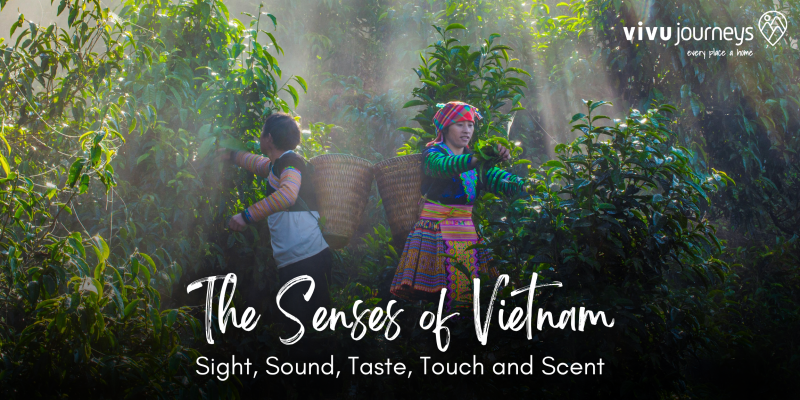


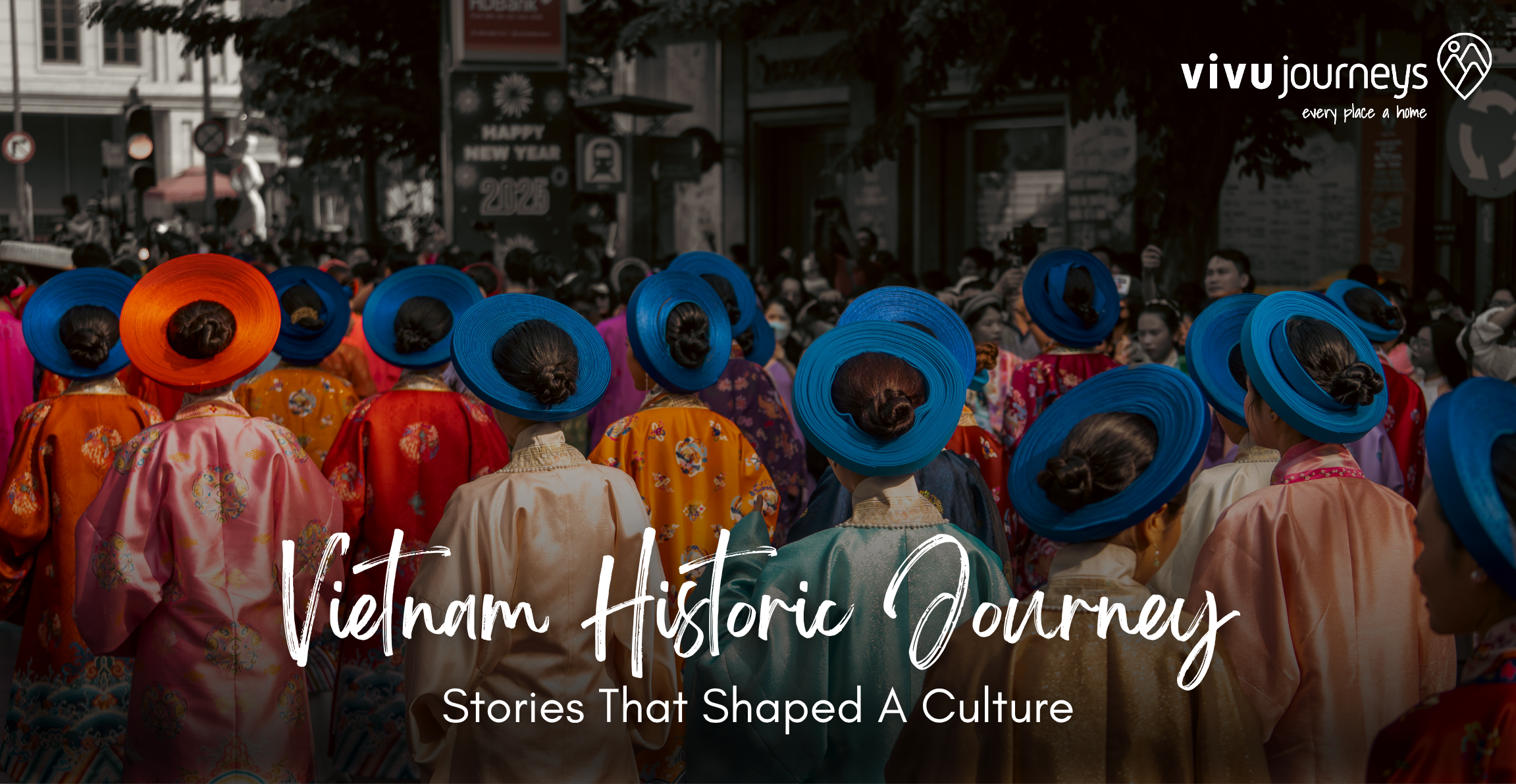
Vietnam’s history is not something left behind, it lives in its ancient streets, enduring traditions, local flavors, and stories passed down through generations. A Vietnam historic journey invites travelers to look beyond famous landmarks and connect with the people, cultures, and moments that have shaped the country, from its early kingdoms to modern life.

Why Vietnam’s History Makes Travel More Meaningful
1. Discover Vietnam Beyond Its Famous Landmarks
Vietnam’s history gives familiar destinations a deeper meaning. A visit to Hue, Hoi An, My Son, or Hanoi becomes more than sightseeing when travelers understand the people, beliefs, and cultural exchanges behind each place. A historical journey through Vietnam turns landmarks into chapters of a much larger story.
2. Connect Historical Stories with Everyday Life

In Vietnam, the past can still be found in ordinary moments, from the food served at a family table to traditional crafts, neighborhood architecture, festivals, and rituals passed down through generations. Experiencing these elements with local people allows travelers to see Vietnamese history and culture not as something preserved in the past, but as something still lived and evolving today.
3. Turn History into a Meaningful Travel Experience
FIT and Tailor-Made Travelers

The freedom to shape their own itinerary allows FIT and tailor-made travelers to follow the parts of Vietnamese history that genuinely interest them. Ancient architecture may lead them to Hue or My Son, while an interest in local life can inspire visits to craft villages, historic neighborhoods, and family-run experiences.
Families and Kids
Vietnam’s history can become something to see, touch, taste, and experience together. Making a traditional craft, exploring an ancient site through storytelling, or discovering the story behind a local dish can make the past easier for children to understand. More importantly, these shared moments can turn history into memories that stay with the family long after the journey ends.
Luxury and Incentive Travelers

For luxury and incentive travelers, cultural depth can add a more distinctive layer to a carefully designed journey. Private heritage visits, intimate encounters with artisans, curated culinary experiences, and meaningful community interactions can reveal a side of Vietnam that feels personal rather than conventional.
Educational Travel
Authentic cultural experiences create a bridge between historical knowledge and real life. Visiting heritage sites, meeting local communities, observing traditional practices, and learning directly from local people can help students understand how the past continues to influence Vietnamese society today.
A Journey Through the Layers of Vietnamese History
Vietnam’s story was shaped across different kingdoms, dynasties, cultures, and periods of change. Following these layers through the places where they unfolded allows travelers to experience the past as a connected story rather than a collection of isolated landmarks.
1. Origins, Kingdoms and Cultural Foundations
My Son Sanctuary: Echoes of the Champa Kingdom

The ancient towers of My Son preserve the spiritual and artistic legacy of the Champa Kingdom. Set among green valleys, this remarkable sanctuary offers a glimpse into a civilization shaped by Hindu traditions and centuries of cultural exchange in Central Vietnam.
Hoa Lu: Tracing Vietnam’s Early Dynasties
Once the capital of the Dinh and Early Le dynasties, Hoa Lu offers a window into an important chapter of Vietnam’s early state-building. Surrounded by limestone mountains and peaceful countryside, its temples and historic landscape make the country’s early royal history feel remarkably close.
2. Dynasties, Royal Heritage and Traditions
Hue Imperial City: Walking in the Footsteps of Emperors

Hue preserves the grandeur of Vietnam’s imperial past through its Imperial City, royal tombs, temples, and historic landscapes. Exploring these places reveals more than the lives of the Nguyen emperors; it opens a window into the traditions, beliefs, and aesthetics of Vietnam’s royal court.
Royal Traditions: Cuisine, Music and Craftsmanship
The legacy of Vietnam’s royal dynasties continues through traditions once associated with court life. Vietnam’s royal heritage can be experienced through Hue’s royal cuisine, traditional court music, ceremonial traditions, and refined craftsmanship, creating a more intimate connection with the culture behind the monuments.
3. Architecture, Cities and Cultural Change
Hanoi: Layers of History in Everyday Life
Hanoi brings together ancient temples, traditional architecture, historic streets, and French colonial influences within a city that continues to evolve. From the Old Quarter to the Imperial Citadel of Thang Long, walking through Hanoi reveals how different periods have gradually shaped the character of Vietnam’s capital.
Read more: Imperial Citadel of Thang Long: Unearth Hanoi’s Hidden Heritage
Ho Chi Minh City: A City Shaped by Change

Ho Chi Minh City reveals a different chapter of a Vietnam historic journey, shaped by modern history, French-influenced architecture, and the energy of a constantly changing city. Historic landmarks stand alongside contemporary buildings and vibrant streets, showing how the city has evolved while remaining deeply connected to its cultural roots.
Living Architecture: Where the Past Meets the Present
Vietnam’s historic architecture is not simply preserved for visitors to admire; much of it remains part of everyday life. Old houses, traditional shopfronts, temples, and historic streets continue to welcome local communities, allowing travelers to experience Vietnam’s architectural heritage as something living rather than frozen in time.
Experience A Vietnam Historic Journey Through Local Culture

The most memorable historical experiences often begin beyond the monument itself. Meeting local people, sharing food, learning traditional crafts, and observing everyday customs can reveal how Vietnam’s past continues to shape life today.
1. Local People and Personal Stories
The past becomes more meaningful when it is told by the people who live with it every day. A conversation with a local guide, artisan, food vendor, or community host can reveal family memories, traditions, and personal connections that rarely appear in history books. These encounters bring a human side to a Vietnam historic journey, helping travelers understand not only what happened, but how the past continues to matter.
2. Traditional Craft and Living Heritage

Vietnam’s heritage can be found in the hands of people who continue to keep traditional crafts alive. From pottery in Bat Trang and silk weaving to Dong Ho folk paintings and lantern-making in Hoi An, these crafts carry techniques and cultural values across generations. Meeting the makers and trying the craft themselves allows travelers to become part of that living heritage, even for a moment.
3. Vietnamese Food Through Its Stories

Every Vietnamese dish carries a story shaped by place, history, and generations of family traditions. From pho in the North to Hue’s refined royal cuisine and the bold flavors of the southern region, food offers a delicious way to understand how Vietnamese culture has evolved. Visiting a local market, cooking with local ingredients, or sharing a meal with a Vietnamese family turns Vietnamese food into a doorway to the people and stories behind it.
4. Traditional Customs and Daily Life

Some of Vietnam’s deepest cultural traditions are found not in grand monuments, but in ordinary moments. Celebrating Tet, honoring ancestors, preparing family meals, visiting temples, and gathering for local festivals all reflect values carried across generations. Experiencing these customs alongside local communities offers a closer look at the traditions that continue to shape Vietnamese life.
5. Walk Through Historic Neighborhoods
History does not live only behind museum walls or inside famous monuments. It can be found along quiet streets, behind old wooden doors, in small temples, family-run shops, and the everyday rhythm of local neighborhoods. Walking through Hanoi’s Old Quarter or Hoi An allows travelers to slow down, notice the details, and discover how the past continues to live alongside the present.
How to Build a Meaningful Vietnam Historical Itinerary?

1. Balancing Historical Sites and Local Experiences
A meaningful Vietnam historical itinerary is not about checking off monuments. Balance heritage sites with local markets, village visits, and shared meals to see how Vietnam’s history continues to shape everyday life.
2. Connecting Different Periods of Vietnamese History
Let each destination tell a different chapter of Vietnam’s story. From ancient kingdoms and imperial dynasties to colonial influences and modern history, connecting these periods helps travelers understand how the country has evolved over time.
3. Allowing Time for Context and Storytelling

History becomes more memorable when there is time to hear the stories behind a place. A thoughtfully paced Vietnam historic journey allows travelers to slow down, listen to local perspectives, and give each site enough space to move beyond dates and facts into something they can truly connect with.
4. Combining Heritage with Food, Nature, and Community Experiences
Vietnamese heritage lives beyond monuments and museums. Pair historical sites with regional food, natural landscapes, traditional crafts, and community experiences to discover how the past remains woven into local life today.
5. A Historic Journey from North to South
A well-planned Vietnam historical itinerary can take travelers through the country’s story from North to South. Start in Hanoi, continue to Central Vietnam for imperial heritage and historic towns, then head south to discover places shaped by more recent chapters of Vietnam’s history.
Traveling across these regions also reveals how history lives on in Vietnam’s landscapes, cuisines, traditions, and everyday life. Rather than separate stops, the journey becomes one connected story of the country’s past and present.
- Explore more: 14-Day Authentic Vietnam’s Hidden Gems
8-Day Essence of Vietnam North to South
Why Work with a Local DMC to Design a Vietnam Historic Journey?

A well-designed historic journey takes more than a list of famous landmarks. Working with a local DMC means having people who understand the stories behind each place, know how to connect different chapters of Vietnam’s past, and can introduce travelers to experiences that may not appear in a guidebook.
Vivu Journeys turns this local knowledge into thoughtfully crafted Vietnam historic journeys, connecting heritage sites with local culture, food, communities, and everyday life. Whether you are looking to Partner with us to create a tailored program or Enquire Now about a customized journey, our local team can help bring each chapter of Vietnam’s story to life.