

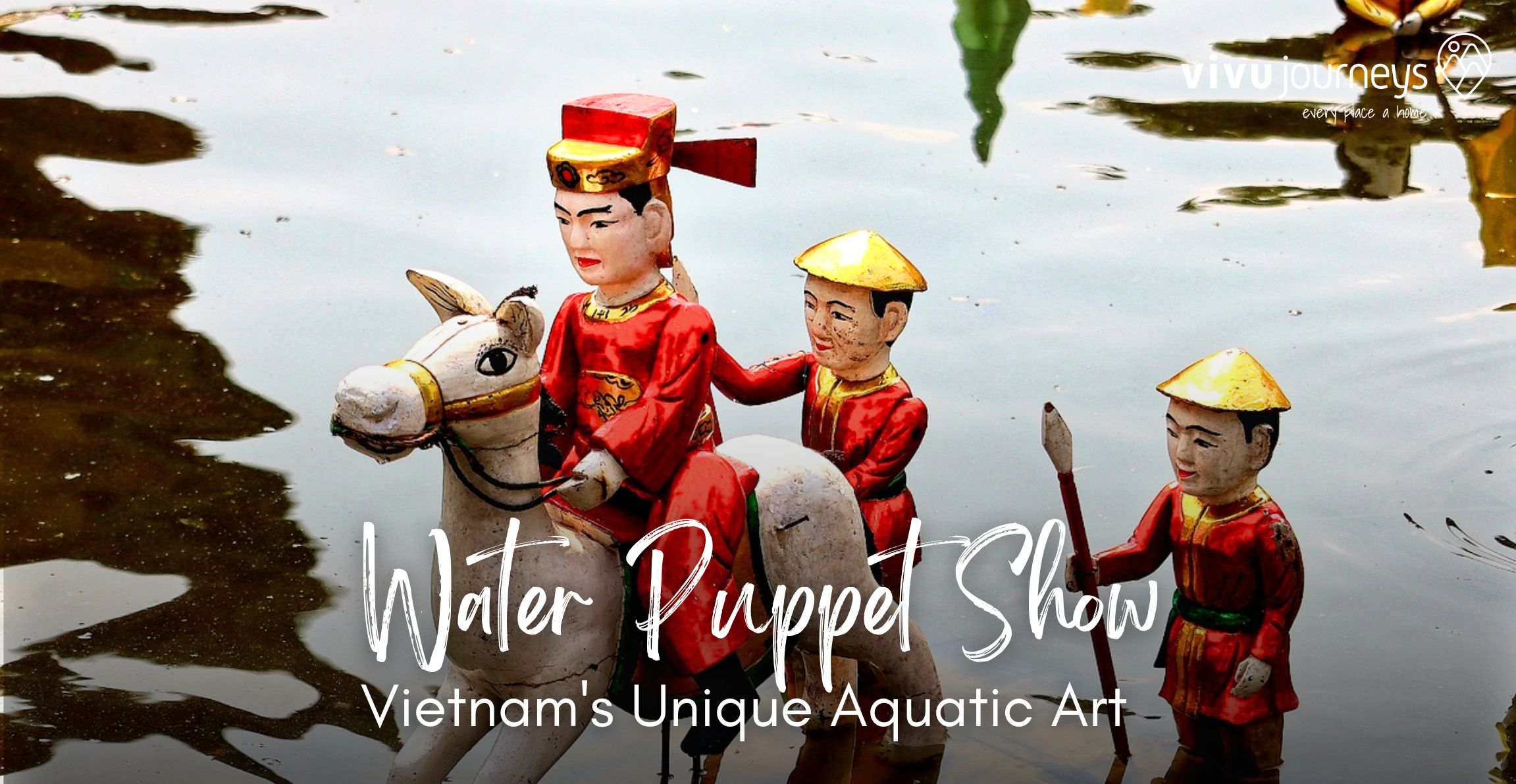
Watching a traditional Water Puppet Show in Hanoi is unlike any other cultural experience in Southeast Asia. While puppetry exists in many parts of the world, Vietnam remains the only country where puppets perform on water.
1. The Origins of Vietnam’s Traditional Water Puppet Show
The origins of the Vietnamese water puppet show date back nearly 1,000 years to the 11th century during the reign of the Ly Dynasty. The art form first appeared in villages across Northern Vietnam’s Red River Delta. During the rainy season, flooded rice paddies naturally became gathering spaces for local celebrations and festivals.
Villagers began creating puppet performances directly on the water to entertain the community after the harvest season. Over time, these performances evolved into a sophisticated folk art tradition passed down through generations.

The shows were deeply connected to agricultural beliefs and spiritual life. Performances were often held to honor village guardians and water spirits, with the hope of bringing favorable weather, fertile land, and abundant harvests.
2. Behind the Scenes: How a Water Puppet Show is Performed
A traditional Water Puppet Show begins with a specially prepared stage known as the “Thủy Đình”, or water pavilion. The pavilion is designed to resemble a small communal temple and stands above a pool of waist-deep water that becomes the main performance area. While the audience sees a calm water surface, much of the real work happens hidden beneath it.
Behind a bamboo curtain at the back of the pavilion, puppeteers stand in the water throughout the performance. Completely hidden from audience’s view, they control the puppets using long bamboo poles, wooden rods, and underwater string systems attached to each figure. Through these techniques, the puppets appear to glide naturally across the water, dance in circles, race boats, or even breathe fire during dramatic scenes.

The performance requires careful timing and coordination between the puppeteers. Every movement must match the music, storytelling, and sound effects happening live onstage. Many of these techniques have been passed down through generations within performing families and cultural troupes, making water puppetry both a traditional craft and a form of living heritage.
The puppets themselves are carefully handcrafted before the show begins. Most are carved from lightweight fig wood, known locally as sung wood, because it is durable enough to withstand constant exposure to water. After carving, artisans coat the figures with several layers of waterproof lacquer and colorful paint to protect them while giving each character its distinctive appearance.
Many puppets represent scenes from everyday rural life in Northern Vietnam, including farmers planting rice, fishermen casting nets, village musicians performing, or mythical creatures such as dragons and phoenixes appearing in legendary tales.

Live music is also an essential part of the experience. Throughout the performance, a traditional Vietnamese orchestra performs beside the stage using drums, flutes, cymbals, and folk instruments, including the “đàn bầu” monochord. Inspired by traditional “Chèo” folk opera, the musicians and singers help narrate the stories, create sound effects, and bring emotional energy to each scene.
Together, the hidden puppetry, handcrafted figures, and live music create the distinctive atmosphere that makes the Vietnamese water puppet show unlike any other performance in the world.
3. How Water Puppet Shows Reflect Vietnamese Culture and Values
More than just a form of entertainment, the traditional Water Puppet Show offers a deeper understanding of Vietnam’s culture, traditions, and way of life. Many performances are inspired by the everyday experiences of rural communities in Northern Vietnam, especially in the Red River Delta.
Scenes often portray familiar moments from village life, including rice planting, fishing, duck herding, harvesting, boat racing, and seasonal festivals. These simple yet meaningful scenes capture the rhythms of daily life and the strong sense of community that has shaped Vietnamese culture for generations.

Water puppet shows also preserve important legends and historical stories that remain deeply connected to Vietnam’s national identity. One of the most well-known tales is the legend of Le Loi and the Golden Turtle, which is associated with Hoan Kiem Lake in Hanoi. By bringing these stories to life through performance, the art form helps keep traditional folklore accessible to both local audiences and international travellers.
Another important cultural symbol within the performances is “Chú Tễu”, the cheerful village jester who often introduces the stories with playful humor and witty commentary. Despite his lighthearted personality, the character represents an important Vietnamese value: the ability to remain optimistic, resilient, and joyful even during challenging times.

Today, attending a water puppet show is also a way of supporting the preservation of one of Vietnam’s most treasured traditional art forms. Passed down through generations, water puppetry continues to keep centuries-old customs, music, craftsmanship, and storytelling traditions alive in modern Vietnam.
Learn more:
- Vietnamese Tea Culture: A Guide to Traditional Tea in Vietnam
- Vietnamese Coffee: History, Unique Brewing & Regional Favorites
4. Best Venues in Hanoi and Travel Tips
There are several excellent venues where travellers can enjoy the performance in Hanoi. Each theater provides a slightly different atmosphere, from large professional productions to more traditional open-air settings.
Thang Long Water Puppet Theatre: Located near Hoan Kiem Lake in the heart of the Hanoi Old Quarter, this is the most famous venue for watching a water puppet show in Hanoi. The theater is popular for its convenient location, high production quality, and multiple daily performances. For first-time visitors, it is often considered the easiest and most accessible option.
Lotus Water Puppet Theatre: Situated closer to the historic Hanoi Opera House, the Lotus Water Puppet Theatre offers a slightly more intimate atmosphere. With smaller crowds and shorter waiting times, it can be an excellent alternative for travellers seeking a quieter experience while still enjoying a high-quality performance.
Vietnam Museum of Ethnology: For travellers interested in a more traditional setting, the Vietnam Museum of Ethnology occasionally hosts outdoor water puppet performances on weekends. The open-air pond setting feels closer to the original village performances that inspired the art form centuries ago, offering a more authentic cultural atmosphere.

Practical Tips Before You Go
- Book tickets online or at least 24 hours in advance during peak travel seasons.
- Choose seats in the middle rows for the best overall view.
- Avoid sitting too close to the front if you do not want occasional water splashes.
- Evening performances are especially atmospheric after exploring Hanoi’s Old Quarter.
You can also combine a water puppet show with nearby cultural experiences, local street food tours, or a walking route around Hoan Kiem Lake for a fuller introduction to Hanoi.
5. Experience Vietnam’s Living Traditions with Vivu Journeys
At Vivu Journeys, we help travellers experience Vietnam beyond sightseeing – through stories, people, craft, performance, and meaningful local encounters. A water puppet show can be thoughtfully woven into a Hanoi itinerary alongside heritage walks, local dining, museum visits, or family-friendly cultural experiences.
For more authentic cultural experiences and thoughtfully curated journeys across Vietnam, enquire now or partner with us to create meaningful itineraries beyond the usual tourist trail.