

In Vietnam, food is more than what reaches the table – it is a story that begins in the market. Market-to-Table experiences invite travelers to follow that story, from choosing fresh local ingredients and learning traditional preparation to cooking, sharing, and savoring a meal. Along the way, every ingredient opens a small window into Vietnamese culture, connecting travelers not only with the food, but with the people and communities behind it.
What Is a Market-to-Table Experience?
1. From Markets to the Dining Table

Market-to-Table experiences take travelers beyond simply tasting Vietnamese food and into the story behind every dish. The journey often begins in local markets in Vietnam, where fresh herbs, vegetables, seafood, spices, and seasonal ingredients are carefully selected.
From there, travelers can learn how ingredients are prepared, discover traditional cooking techniques, and eventually enjoy a meal they have helped create. Moving from market to kitchen to table, the experience reveals how everyday ingredients become part of Vietnam’s rich culinary traditions.
2. More Than Just a Food Tour

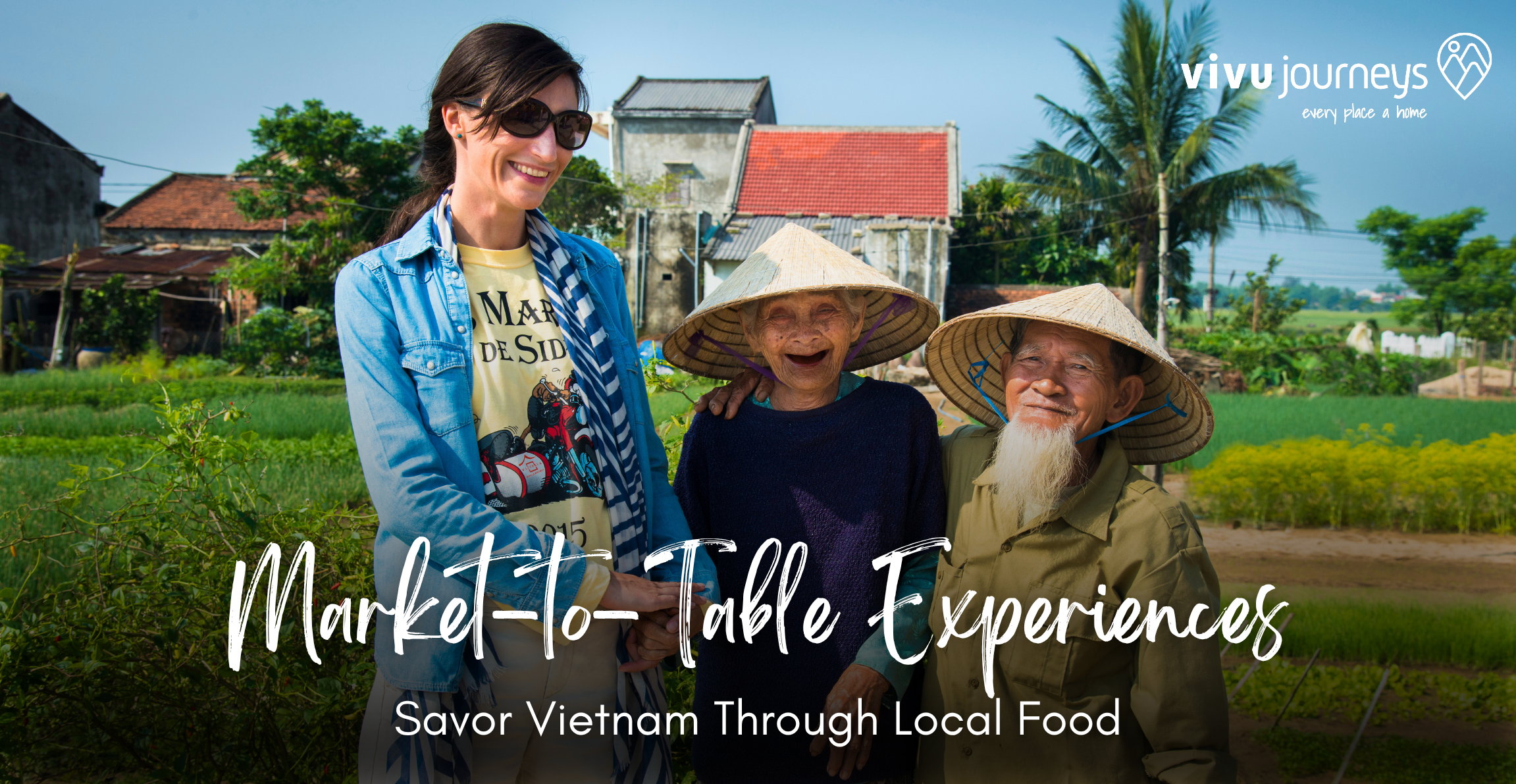
Unlike a traditional food tour, culinary experiences in Vietnam can offer a much deeper connection with local life. Rather than simply sampling dishes, travelers are invited to participate, learn, and share. Choosing ingredients with a local, preparing a family recipe, or sitting down for a shared meal creates a more personal connection to Vietnamese food culture.
Through these hands-on moments, food becomes more than something to taste – it becomes a way to understand local traditions, everyday life, and the people who keep Vietnam’s culinary heritage alive.
What Makes Market-to-Table Special in Vietnam?
1. Fresh and Diverse Local Ingredients

The magic of Market-to-Table experiences in Vietnam often starts with something simple: fresh ingredients. Fragrant herbs, seasonal vegetables, seafood, rice, and spices fill local markets with color, aroma, and life. Walking through these markets gives travelers a glimpse into how Vietnamese families choose and use the ingredients that shape their everyday meals. Chosen at their freshest, these ingredients carry the taste of the land and the rhythm of the seasons – before they ever reach the table.
2. A Rich and Diverse Regional Food Culture
From the subtle flavors of the North to the bold tastes of Central Vietnam and the sweeter notes of the South, every region has its own culinary story. Culinary experiences in Vietnam allow travelers to discover these differences not only through dishes, but through the local ingredients and traditions that shape them. Each market, each recipe, and each flavor offers a small taste of where you are.
3. Food as a Connection to Local Life

In Vietnam, food has a way of bringing people closer. Vietnamese food culture lives in busy markets, family kitchens, shared meals, and the simple act of sitting down together. When travelers shop at a local market, cook alongside a family, or share a meal at the same table, they experience something beyond food – a genuine connection to the people and everyday life of Vietnam.
Where to Enjoy Market-to-Table Experiences in Vietnam
1. Hanoi: Northern Vietnamese Flavors

Hanoi offers a gentle introduction to Northern Vietnamese cuisine, known for its subtle, balanced, and refined flavors. Local markets are filled with fresh herbs, rice noodles, pork, scallions, mushrooms, and seasonal vegetables – simple ingredients that form the foundation of everyday Vietnamese cooking.
Once selected, these ingredients can become hands-on dishes such as “bún chả“, “bánh cuốn“, or simple noodle and herb dishes. Travelers can season the meat, prepare fresh herbs, and assemble their meal before sitting down to enjoy what they have created. It is a simple way to turn a morning market visit into a personal taste of Hanoi.
You may also like: Vietnamese Cuisine: A Journey Through 3 Regional Flavors
2. Hoi An and Hue: Central Vietnam’s Culinary Heritage

In Hoi An and Hue, Central Vietnamese cuisine is known for its bold, rich, and sometimes spicy flavors. Markets offer an abundance of fresh herbs, shrimp, pork, rice, chili, turmeric, and seafood, giving travelers a chance to discover the ingredients behind the region’s distinctive cooking traditions.
With these fresh market finds, travelers can get hands-on with dishes such as “bánh xèo“, “bánh khoái“, or “mì Quảng“. From mixing and seasoning fillings to folding, cooking, and assembling each dish, the process makes traditional cooking feel accessible and personal. In Hue especially, these techniques connect travelers with culinary traditions that have been carefully passed down through generations.
See more: Hoi An food: A Taste of Authentic Central Vietnam
3. Ho Chi Minh City and the Mekong Delta: Southern Flavors

Further South, Southern Vietnamese food culture reflects the richness of the land and waterways. Markets are abundant with tropical vegetables and fruits, fresh herbs, shrimp, freshwater fish, rice flour, coconut water, and other local produce. These ingredients offer an inviting starting point for exploring the region through food.
Travelers can turn them into dishes such as “canh chua“, “cá kho tộ“, or simple coconut-based dishes, learning how local ingredients come together in everyday meals. Along the way, cooking with a local family or producer can make the experience even more meaningful – sharing not only the food, but also the stories, techniques, and traditions behind it.
Why Market-to-Table Makes Travel More Meaningful
1. Supporting Local Communities

A Market-to-Table experience creates a more direct connection between travelers and the people who grow, produce, and prepare their food. Buying from local vendors, farmers, and family-run businesses means that what travelers spend can return to the communities they visit. It turns a meal into a small but meaningful way of supporting local livelihoods.
2. Preserving Culinary Traditions
Every recipe carries a piece of history. Traditional Vietnamese cooking lives on through ingredients, techniques, and family recipes passed from one generation to the next. By learning to prepare these dishes alongside local cooks, travelers do more than recreate a meal – they become part of the story that helps keep these traditions alive.
3. Creating Deeper Cultural Connections

The most meaningful journeys are often found in the simplest moments. Culinary experiences in Vietnam allow travelers to sit at a local table, share a meal, and hear the stories behind what they are eating. They leave not only with the memory of a flavor, but with a deeper understanding of the people, places, and everyday traditions that gave it meaning.
Tips for a Better Market-to-Table Experience

The best Market-to-Table experiences leave room for curiosity. Rather than simply following a set itinerary, slow down, pay attention, and let the market, the ingredients, and the people around you shape the experience.
- Visit markets in the morning – Experience the freshest ingredients and the lively rhythm of local daily life.
- Try seasonal and regional ingredients – Let the season introduce you to flavors that are naturally connected to each destination.
- Ask questions and interact respectfully with locals – A simple conversation with a vendor or cook can make the experience feel more personal and genuine.
- Choose small-group or community-based experiences – These experiences often create more meaningful connections while supporting local communities.
- Be open to unfamiliar flavors – Some of the most memorable moments begin with trying something you have never tasted before.
Experience Vietnam from Market to Table with Us

With Vivu Journeys, discovering Vietnam through food can become part of a wider journey. Selected itineraries include hands-on cooking classes and local culinary experiences, giving travelers the chance to explore ingredients, learn traditional techniques, and enjoy the dishes they have helped create. Combined with authentic local encounters, these moments bring Vietnam’s food culture closer – one ingredient, one recipe, and one shared meal at a time.
Ready to experience Vietnam through its flavors? Partner with us or Enquire Now to create a journey that brings you closer to the heart of Vietnam.