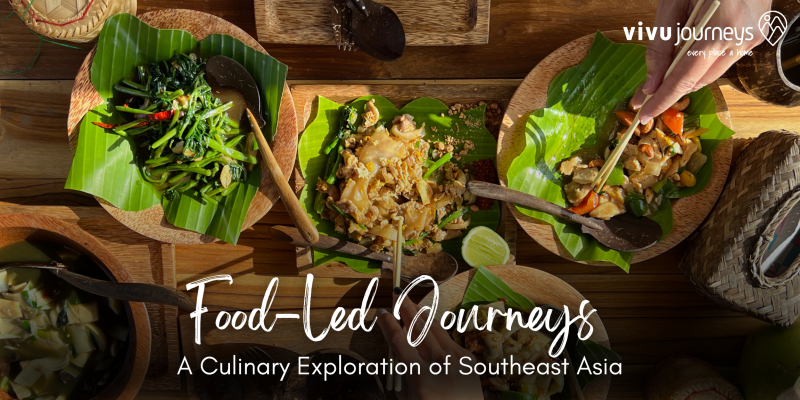

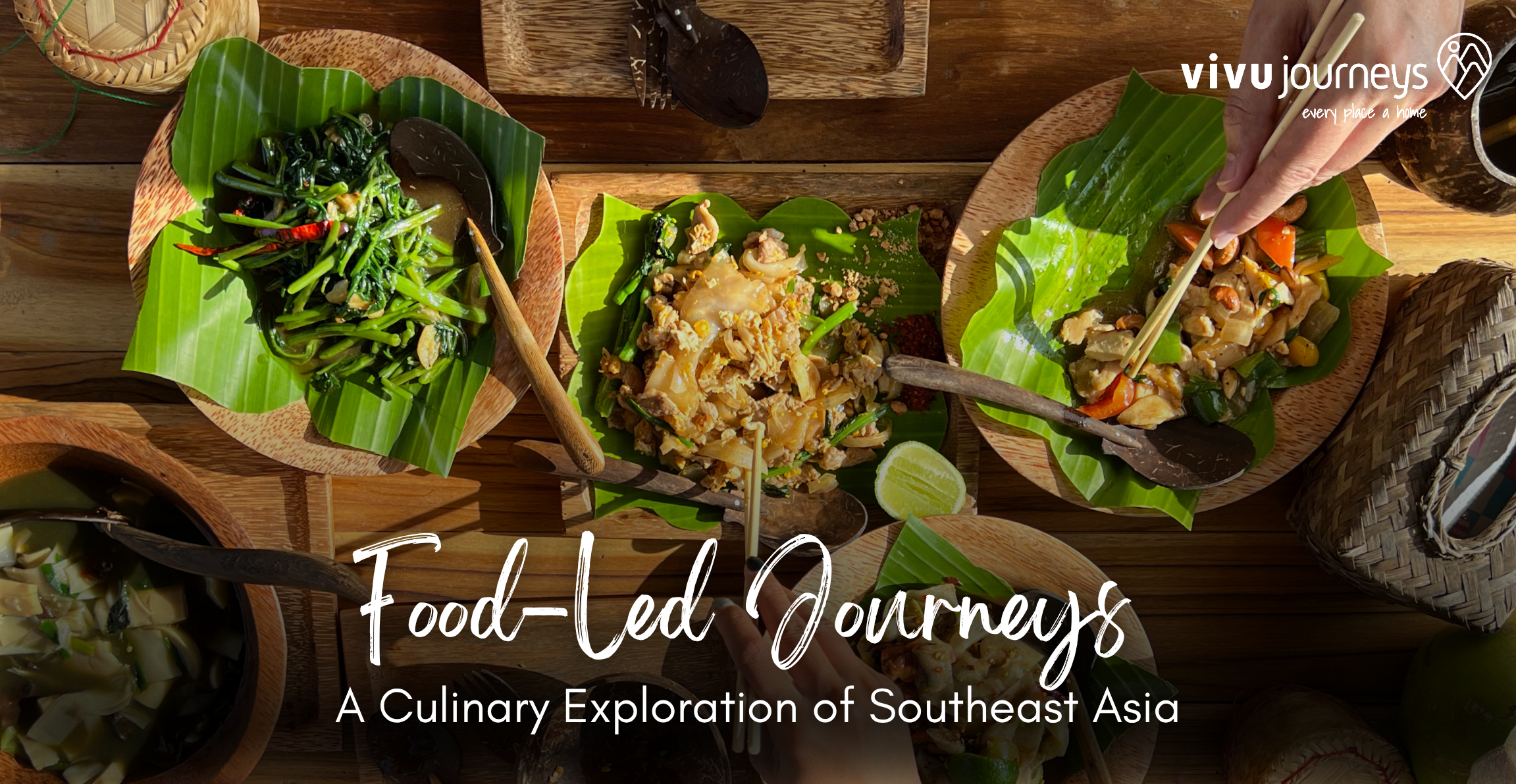
Food can be more than something we taste along the way. It can shape the places we visit, the people we meet, and the stories we take home. Across Vietnam, Thailand, Laos, and Cambodia, food-led journeys invite travelers to discover Southeast Asia through its flavors, local ingredients, culinary traditions, and everyday life. From bustling markets to family kitchens and street-side tables, every meal can become part of the journey.
How Food Opens Up Southeast Asia
Food as a Gateway to Culture

Food offers a taste of more than just a destination’s cuisine. Local ingredients, cooking methods, markets, and family recipes reveal traditions and stories that have been passed down through generations. Sharing a meal can be one of the simplest ways to feel closer to the culture around you.
More Than a Meal

Food-Led Journeys turn everyday dining into a deeper way of experiencing a place. A street-food walk can lead to a local market, a cooking class can reveal family traditions, and a farm-to-table meal can show where local ingredients come from. Beyond what is on the plate, each experience brings you closer to the people and stories behind it.
- You may also like: Market-to-Table Experiences: Savor Vietnam Through Local Food
A Journey for Every Traveler
Food can fit naturally into many travel styles, from a first taste of local flavors to deeper experiences of food culture. Couples may discover new flavors through intimate dining, families can learn together through cooking experiences, while wellness and luxury travelers can explore fresh ingredients, mindful dining, and carefully crafted experiences. These culinary journeys offer everyone a personal way to connect with a destination.
The Flavors That Shape Southeast Asia
Vietnam: Fresh, Balanced and Diverse Flavors

Vietnamese cuisine is celebrated for its fresh flavors, delicate balance, and incredible variety, with dishes that have become beloved far beyond the country’s borders.
- Bánh mì: A crisp baguette filled with savory meats, pâté, pickled vegetables, fresh herbs, and a touch of chili, bringing together contrasting textures and flavors in every bite.
- Phở: Fragrant broth, soft rice noodles, tender meat, and fresh herbs come together in one of Vietnam’s most iconic and comforting dishes.
- Bún chả: Smoky grilled pork is served with rice noodles, fresh herbs, and a light dipping sauce, offering a delicious taste of Hanoi’s everyday food culture.
Beyond the dishes themselves, culinary experiences offer a closer way to discover everyday Vietnam. Travelers can join Hanoi street-food walks, trace the stories behind Vietnam’s iconic dishes, explore its distinctive coffee culture, or learn traditional recipes through a hands-on cooking class. From watching “bánh mì” being prepared on a busy street to enjoying a slow cup of Vietnamese coffee, these moments reveal how food is woven into daily routines, regional identities, and the rhythm of life across the country.
- Discover more: Vietnamese Street Food You Can’t Miss
Thailand: Bold, Aromatic and Layered Flavors

Every Thai meal brings a lively interplay of heat, acidity, sweetness, and saltiness, creating flavors that are bold, vibrant, and full of character.
- Tom Yum: A hot and sour soup layered with fragrant herbs, bringing a bright, aromatic kick to every spoonful.
- Pad Thai: Stir-fried rice noodles combine sweet, savory, and tangy flavors with a satisfying mix of textures.
- Green Curry: Creamy coconut milk meets fresh herbs and chili, creating a rich yet balanced curry with a distinctive Thai character.
Thailand’s food culture can take travelers straight into the rhythm of the places they visit. In Bangkok, the buzz of a tuk-tuk ride through lively streets can lead into a street-food trail that reveals the city after dark. Chiang Mai offers a closer look at traditional ways of preparing and sharing food, while the southern coast connects travelers with fishing communities and coastal life. These experiences make food exploration a natural way to discover Thailand beyond the plate.
Laos: Simple, Fresh and Herb-Driven

Fresh, earthy, and herb-forward flavors are at the heart of everyday eating in Laos, where simple ingredients come together in dishes full of character.
- Laap (Larb): Minced meat or fish is mixed with fresh herbs, lime, and toasted rice, creating a light yet earthy dish with a fresh, aromatic finish.
- Khao Niew: Sticky rice is a beloved everyday staple, traditionally shared by hand and enjoyed alongside many Lao dishes.
- Tam Mak Hoong: Shredded green papaya is combined with chili, lime, and local seasonings for a spicy and sour salad with plenty of freshness.
A slower pace defines many food experiences in Laos. In Luang Prabang, the quiet ritual of giving alms to monks at sunrise gradually gives way to the town’s morning rhythm, while journeys along the Mekong reveal riverside life and landscapes shaped by the river. food-led journeys here are less about ticking off dishes and more about slowing down, observing, and connecting with the atmosphere of the place.
- Continue reading: Laos Food Guide: Must-Try Dishes & Traditional Cuisine
Cambodia: Rich, Fragrant and Rooted in Tradition

From fragrant herbs and gentle spices to creamy coconut and fermented flavors, Cambodian food carries the warmth of Khmer traditions in every dish.
- Fish Amok: Tender fish is gently cooked with coconut milk and Khmer spices, creating a fragrant, creamy dish often regarded as a signature of Cambodian cuisine.
- Beef Lok Lak: Tender beef is paired with a peppery lime dipping sauce, balancing savory richness with a bright, tangy finish.
- Nom Banh Chok: Rice noodles are served with a herb-rich curry gravy, creating a fresh and comforting dish closely associated with everyday Cambodian food culture.
From the pepper farms of Kampot to the salt fields around Kep, the food-led journeys behind Cambodia’s food can be just as fascinating as what reaches the table. Travelers can explore the countryside, see how local ingredients are grown and produced, and join a cooking class to transform these fresh harvests into authentic regional dishes. This makes food discovery a way to experience Cambodia through its land, people, and stories, not simply its dishes.
Practical Tips for a Memorable Food-Led Journey

- Trace the Ingredients: Start at the source. Visit local farms, fishing villages, and bustling morning markets to see where regional flavors originate before they reach your plate.
- Learn the Local Craft: Go beyond simply tasting the food. Engage in hands-on experiences or cooking classes to uncover the specific techniques and secrets behind traditional dishes.
- Connect with the Makers: Take the time to interact with the street vendors, artisans, and farmers. They are the storytellers who keep a destination’s culinary heritage alive.
- Share a Home-Cooked Meal: For the most authentic experience, sit down for a meal in a local home. It is the best way to experience genuine hospitality and the personal stories that shape the culture.
- Slow Down and Immerse: Treat each meal as a cultural gateway rather than a quick stop. Get involved, ask questions, and let the dining experience reveal the true character of the places you visit.
Create Your Next Exploration with Vivu Journeys

The most memorable journeys are often found in the simplest moments – a dish shared at a roadside table, a morning spent following the scent of coffee through the streets, or a new flavor discovered in a place you have never known before. Let Vivu Journeys turn these moments into meaningful food-led journeys, connecting you with the flavors, places, and stories that make Southeast Asia worth experiencing.
Ready to discover where food can take you? Enquire Now or Partner With Us to start creating your next journey.