


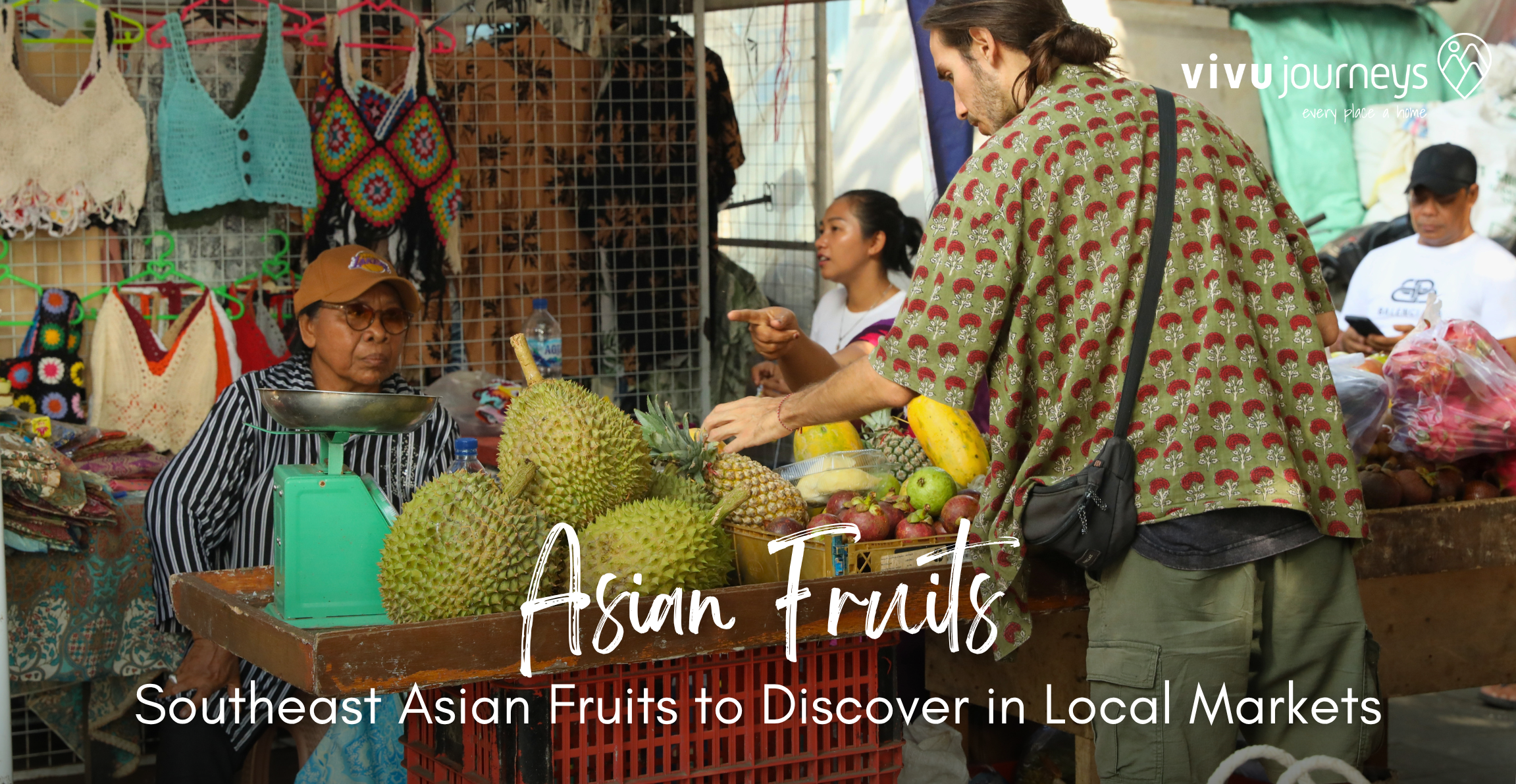
Southeast Asian fruits are deeply connected to everyday life across Southeast Asia, especially in traditional markets where locals shop for fresh produce every morning. For many Western travelers, visiting local markets in Southeast Asia feels completely different from walking through a modern supermarket.
1. Why Southeast Asian Fruit Markets Are Worth Visiting
One of the first things travelers notice about local markets in Southeast Asia is how open and seasonal everything feels. Instead of refrigerated aisles and packaged produce, fruits are commonly displayed in baskets, wooden crates, or roadside stalls under shaded tarps. Vendors often arrange fruits by ripeness, color, and harvest timing rather than by strict product categories.
In many fruit markets in Asia, shopping is still part of a daily routine rather than a weekly activity. Locals frequently buy smaller portions of fresh ingredients each morning, especially in cities where markets operate from sunrise until late morning. This habit creates a constantly changing flow of seasonal produce throughout the year.
Not every fruit is available at all times. While mangoes, bananas, and pineapples are commonly found year-round in many tropical regions, other fruits only appear during specific harvest periods. Travelers may expect to see durian or mangosteen everywhere after reading travel blogs, but in reality, many well-known tropical fruits in Southeast Asia are highly seasonal and sometimes region-specific.
The atmosphere itself is also different from many Western shopping environments. Local markets are often lively, humid, and filled with overlapping smells from herbs, flowers, cooked food, and ripe fruit. In some destinations, travelers can even experience floating markets where fruit trading happens directly on the water. For travelers interested in tasting local fruits, these markets provide not only fresh produce, but also a closer look at everyday food culture across Southeast Asia.

Learn more:
Floating Market: The Beating Heart of the Mekong Delta
2. Common Asian Fruits at Local Markets
2.1 Mango
Mangoes are among the most common Asian fruits in local markets. Their skin ranges from green to golden yellow, while the flesh is soft, juicy, and fragrant. Mangoes are commonly available throughout the year in many parts of Southeast Asia, although sweetness and texture can vary slightly by season. Locals enjoy them in many ways, from fresh slices and smoothies to sticky rice desserts and savory salads.

Local Insight: In some markets, slightly green mangoes are intentionally sold for sour salads or dipping sauces rather than for sweetness. Vendors may ask whether you prefer ripe or unripe varieties before preparing them.
2.2 Pineapple
Pineapples are easy to spot by their rough golden skin and spiky crowns. Compared to supermarket varieties, local pineapples in tropical Southeast Asia are often smaller but noticeably sweeter.

Local Insight: Fresh pineapple is frequently enjoyed with a small pinch of salt or chili powder in several Southeast Asian countries to balance sweetness with savory flavors.
2.3 Dragon Fruit
Dragon fruit stands out with its bright pink skin and green scales. Inside, the flesh is refreshing and lightly crunchy from tiny black seeds. It is widely available in tropical fruit stalls across Vietnam and Thailand.

Local Insight: Vendors sometimes prefer to display dragon fruit in large front-facing piles because the bright color naturally attracts customers’ attention.
2.4 Pomelo
Pomelos are large citrus fruits with thick green or yellow skin and firm, juicy segments inside. Their flavor is lighter and less bitter than grapefruit. Pomelo is commonly sold in local markets, especially around festivals and family gatherings. Many households buy entire fruits rather than small portions because pomelo is often shared among several people.

Local Insight: In some Southeast Asian homes, pomelo is traditionally served after meals during celebrations or family visits because it is easy to divide and share.
2.5 Rambutan
Rambutan is easy to recognize by its hairy red shell and translucent white flesh inside. The texture is juicy and slightly floral, especially during peak harvest months.

Local Insight: Vendors often leave small branches attached because they help preserve freshness and make the fruit visually appealing at market displays.
2.6 Banana
Bananas are among the most commonly available Asian fruits in local markets, but Southeast Asian varieties tend to be smaller and sweeter than those found in Western supermarkets. Locals use them in desserts, snacks, savory dishes, and religious offerings.

Local Insight: Small local banana varieties are often sweeter and softer than imported supermarket bananas, especially when purchased from morning markets.
2.7 Lychee
Lychee has a rough red shell that peels away easily to reveal soft, juicy white flesh with a floral sweetness. During harvest season, markets often display entire lychee branches at once.

Local Insight: Lychee is especially popular during summer harvest seasons and is often turned into cold teas, desserts, and refreshing street drinks enjoyed across Southeast Asia.
3. Seasonal Asian Fruits Travelers Should Look Out For
Some Asian fruits are internationally famous but surprisingly less visible at everyday local markets. Travelers often expect to encounter certain fruits everywhere in Southeast Asia after seeing them frequently in travel videos or on social media. In reality, many exotic fruits in Asia are strongly seasonal, region-specific, or more difficult to transport and store.
3.1 Durian
Durian is one of the most recognizable tropical fruits in Southeast Asia, known for its thick spiky shell and strong aroma. However, despite its global reputation, durian is not consistently available in every market year-round.
Durian is also handled carefully because of its strong aroma and storage because of its powerful smell. Many hotels and public transportation systems across Southeast Asia have rules restricting durian indoors to maintain shared comfort in enclosed spaces.

Local Insight: Many locals choose durians with deep shell seams, a slightly oval shape, and a clearly defined star-shaped base, as these signs often suggest fuller segments and thicker flesh inside.
3.2 Mangosteen
Mangosteen has a dark purple shell with soft white segments inside that are sweet, delicate, and slightly floral. It usually appears most abundantly during specific harvest periods rather than year-round.
Compared with more common fruits such as bananas or pineapples, mangosteen can also be more expensive because the fruit bruises easily and has a shorter shelf life.

Local Insight: The purple rind contains natural pigments that may stain clothing or fingers, so locals often handle ripe mangosteen carefully while opening it. They also check the flower-shaped mark at the bottom of a mangosteen before buying it. More visible segments usually mean more fruit sections inside, while slightly soft skin often indicates better ripeness and texture.
3.3 Langsat
Langsat grows in small pale yellow clusters and has translucent flesh with a sweet yet lightly tart flavor. Outside certain parts of Southeast Asia, this fruit is relatively unfamiliar to many international travelers.
Langsat tends to appear only during harvest seasons and is more commonly found in regional markets than in urban supermarkets. Because the fruit spoils quickly after ripening, availability can change rapidly depending on the weather and local supply.

Local Insight: Experienced vendors often separate sweeter clusters from more tart ones based on skin color and firmness.
3.4 Salak
Salak, sometimes called snake fruit, has reddish-brown skin covered in small scale-like patterns resembling snakeskin. Inside, the flesh is firm, slightly crunchy, and noticeably less juicy than many other Asian fruits.
Unlike mangoes or bananas, salak is strongly associated with specific countries such as Indonesia, meaning travelers may not encounter it regularly across all local markets in Southeast Asia. Availability also varies by region and season.

Local Insight: The thin outer skin can usually be peeled by hand from the pointed tip downward, revealing separate fruit segments inside.
4. Why Seasonality Shapes the Market Experience
Seasonality plays a major role in shaping fruit markets in Asia. Unlike supermarket chains that import produce throughout the year, many local markets in Southeast Asia still follow natural harvest cycles closely. As seasons change, entire fruit stalls may look completely different from one month to another.
Climate patterns, rainfall, and regional farming conditions all influence when certain Asian fruits become widely available. During peak harvest periods, markets often display large quantities of the same fruit at lower prices and with noticeably better freshness. Outside these periods, the same fruits may become harder to find, more expensive, or available only in limited amounts.
For travelers interested in tasting local fruits, understanding seasonality can significantly improve the experience. Fruits purchased during harvest seasons are often sweeter, juicier, and more aromatic because they spend less time in storage or transportation. Seasonal shopping also reflects how many local families traditionally buy and enjoy produce throughout Southeast Asia.
Exploring local markets during different harvest periods allows travelers to see how closely food culture remains connected to climate and agriculture across the region. Beyond simply trying seasonal tropical fruits, these changing market displays offer a deeper understanding of everyday life and seasonal rhythms in Southeast Asian communities.