

Unique experiences in Hanoi offer travelers more than a checklist of famous landmarks such as the Hanoi Old Quarter and Hoan Kiem Lake. For travel agents and tailor-made travel designers, Hanoi can be shaped into a slower, more personal journey through local food, craft, heritage neighborhoods, and hidden gems.
1. Unique Experiences in Hanoi: Cultural Places Beyond the Icons
1.1. Duong Lam Ancient Village
Duong Lam Ancient Village offers a slow and grounded introduction to northern Vietnamese heritage, making it a meaningful cultural extension from Hanoi. Located outside the city center, only 44 kilometers away from the city center, the village is known for its laterite brick houses, narrow lanes, old village gates, communal spaces, family temples, and peaceful countryside atmosphere.

A Duong Lam visit often begins at Mong Phu Village Gate, a key landmark that introduces the layout of a traditional northern Vietnamese village. The itinerary can include Mong Phu Communal House, nearby temples, and family worship spaces, offering insight into local culture and community life. Many visits end with tea, local snacks, or a hosted lunch in a traditional home, creating a more authentic cultural experience.
Local insight tip: Duong Lam is best experienced slowly. Avoid making it a rushed photo stop. Built in time for tea, conversation, quiet observation, and a gentle walking route that allows travelers to absorb the atmosphere of the village.
1.2. Thang Long Water Puppet Theater
Thang Long Water Puppet Theater is located near Hoan Kiem Lake and within easy reach of the Hanoi Old Quarter, making it one of the most accessible cultural experiences in Hanoi. What makes this experience unique is the art form itself. At Thang Long Water Puppet Theater, visitors can experience Vietnamese water puppetry, a traditional art form rooted in the Red River Delta’s rice-growing culture. The performance combines wooden puppets, live music, and folk storytelling on a water stage, offering an engaging introduction to Vietnamese heritage.

Recommended performance plots to highlight include Teu the Master of Ceremonies, Legend of the Returned Sword, and Phoenix Dance. These performances introduce travellers to the world of northern Vietnamese village life. The show does not rely on one long plot, so it is accessible for first-time visitors and easy to include as a light cultural experience in a Hanoi itinerary.
Learn more: Water Puppet Show: Vietnam’s Unique Aquatic Art
Local insight tip: Pair the show with a pre-performance briefing from the guide. When clients understand the stories and instruments beforehand, the experience feels more meaningful and less touristy.
1.3. Vietnam Museum of Ethnology
The Vietnam Museum of Ethnology is a valuable stop for travelers who want deeper context before traveling beyond Hanoi. Located around 7–8 km from Hanoi Old Quarter, the museum offers an introduction to Vietnam’s ethnic diversity and rituals. This experience is especially valuable for visitors who want deeper context before traveling beyond Hanoi into northern Vietnam.

The museum’s outdoor exhibition area features full-scale traditional houses from Vietnam’s diverse ethnic communities. It gives visitors a deeper understanding of local lifestyles, traditions, and cultural identity beyond standard museum displays. For travel agents, it works well as a context-building experience before more immersive cultural encounters and as a comfortable option during hot or rainy weather.
Local insight tip: Use a specialist guide if possible. The museum becomes much more engaging when connected to the wider route, such as Mai Chau, Pu Luong, Sapa, Ha Giang, or the Central Highlands.
1.4. Hidden Cafés
Hanoi’s hidden cafés are some of the city’s most flexible and unique experiences. They can be tucked inside old houses, down narrow alleys, above busy streets, beside lakes, or behind unassuming doors. For travelers, this makes café-hopping feel less like a simple coffee break and more like a soft cultural discovery.

Recommended hidden cafés in Hanoi:
| No. | Name | Location |
| 1 | Hidden Gem Coffee | 3B Hang Tre (in the alley) Hanoi, Vietnam |
| 2 | Loading T Cafe | 8 Chan Cam Street, Hoan Kiem District, Hanoi, Vietnam |
| 3 | Hanoi House Cafe | 47A Ly Quoc Su Street, Hoan Kiem District, Hanoi, Vietnam |
| 4 | The Hanoi Social Club | 6 Hoi Vu Alley, Hang Bong Street, Hoan Kiem District, Hanoi, Vietnam |
| 5 | The Little Plan | 11 Phu Doan Street, Hanoi City, Hoan Kiem District, Hanoi, Vietnam |
Learn more: Vietnamese Coffee: History, Unique Brewing & Regional Favorites
Local insight tip: Choose cafés with a distinct setting, such as an old house, balcony, courtyard, lakeside corner, or narrow alley entrance. In Hanoi, the location often makes the coffee experience feel more memorable than the drink itself.
2. Unique Hanoi Culinary Experiences
2.1. Unique “Phở” Experience in Hanoi
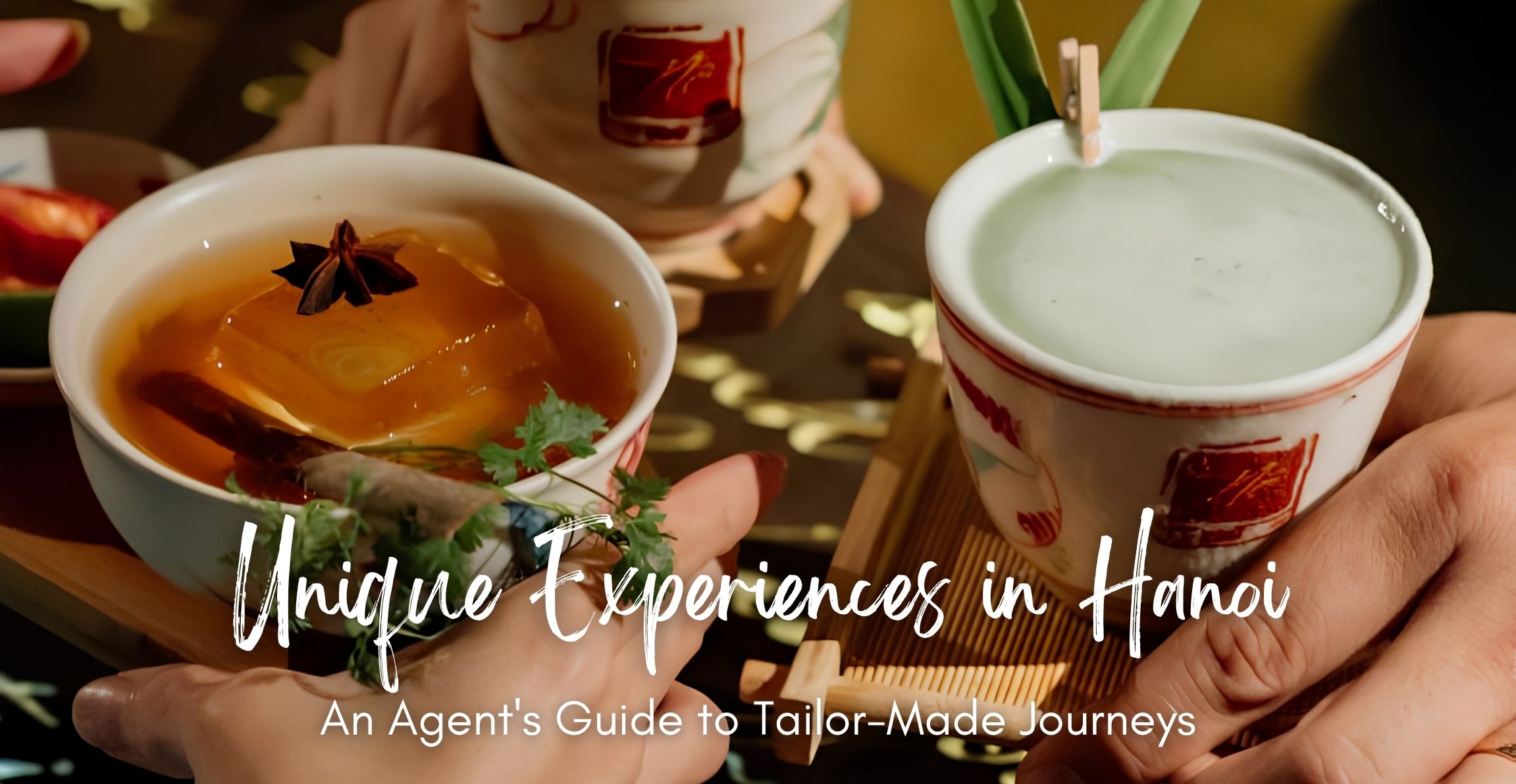
For travelers who think they already know “phở”, this experience offers a creative new perspective on Vietnam’s most iconic dish. Beyond the traditional noodle soup, clients can discover phở-inspired creations such as cocktails and chocolate, providing a unique culinary experience that goes beyond a typical Hanoi street food tour.

Phở-inspired cocktails and chocolate transform the dish’s familiar flavors into unexpected creations. Together, they highlight Hanoi’s ability to blend culinary tradition with creativity, offering a memorable experience for food-loving travelers.
Local insight tip: Present this as an after-dinner tasting or evening food highlight. It works best for clients who enjoy creative cuisine, cocktails, and unexpected local interpretations rather than a traditional food-only experience.
2.2. Signature Local Dish “Chả Cá”
“Chả cá” is one of Hanoi’s most distinctive culinary experiences, offering a deeper look at northern Vietnamese food beyond “phở” and “bún chả”. The dish is made with turmeric-marinated fish, usually served sizzling at the table with fresh dill, spring onions, rice noodles, herbs, roasted peanuts, and dipping sauce. The experience can work beautifully as a lunch or dinner highlight, especially after a cultural walk through the Hanoi Old Quarter or an afternoon exploring hidden gems nearby.

Recommended places to enjoy “chả cá” in Hanoi:
- Cha Ca La Vong: Located at 14 Cha C Street, Hoan Kiem District, this is the historic name most associated with the dish and sits right in Hanoi Old Quarter.
- Cha Ca Thang Long: Located at 6B Duong Thanh Street, Hoan Kiem District, this is a comfortable and reliable option close to Hanoi Old Quarter.
- Vua Cha Ca: With several branches in Hanoi, including central locations such as 26C Tran Hung Dao Street and 9 Ly Thuong Kiet Street, Hoan Kiem District, Vua Cha Ca offers a more polished and modern setting.
Local insight tip: The dish is best enjoyed when it is still hot from the pan. Add the dill and spring onions first, then build each bite with noodles, peanuts, herbs, and sauce so the textures stay fresh and balanced.
2.3. Egg Coffee and Salt Coffee
Hanoi coffee culture is a simple but distinctive way to add a slow moment to an itinerary. Egg coffee is closely tied to Hanoi’s café heritage, with its rich, creamy layer made from whipped egg yolk, sugar, and condensed milk over strong Vietnamese coffee. Salt coffee, by contrast, feels more contemporary, balancing bitterness, sweetness, and a light salty cream that reflects Vietnam’s growing creative café scene.

What makes this experience unique is not only the drink itself, but the setting around it. A coffee stop can lead travelers into hidden cafés above old shop houses, quiet courtyards, lakeside corners, or narrow alleyways that reveal a softer side of the city. It works especially well between more active experiences, giving travelers time to pause while still feeling connected to local life.
Local insight tip: Choose the café for its setting as much as its menu. A balcony over the Hanoi Old Quarter, a quiet courtyard, or a lakeside table can turn coffee into one of the most memorable pauses of the day.
2.4. Dong Xuan Market Food Tour
Dong Xuan Market offers a vivid introduction to Hanoi’s food culture beyond restaurant dining. The experience is unique because travelers are not only tasting Hanoi street food, but also seeing the daily food system behind it. A well-designed Dong Xuan Market food tour can include a short walk through the market area, selected tastings from trusted stalls, and simple explanations of northern Vietnamese ingredients.

Recommended stops and tastings:
- Vietnamese pillow cake: A crispy fried pastry filled with minced pork, mushrooms, glass noodles, and quail egg, offering a savory street snack beyond the usual noodle dishes.
- Green papaya salad with dried beef: A refreshing green papaya salad with dried beef, herbs, peanuts, and sweet-sour dressing, offering a lighter contrast in the tasting route.
- Vietnamese sweet dessert soup: A classic Vietnamese dessert made with ingredients such as beans, jelly, coconut milk, lotus seeds, fruit, or sticky rice, offering a sweet finish to the market food experience.
Learn more: Vietnamese Street Food You Can’t Miss
Local insight tip: Visit before the busiest meal rush and keep the tasting route short. The best experience is usually a focused selection of 3–4 well-chosen bites, not trying to eat everything in the market.
3. Hands-On Hanoi Craft Unique Experiences
3.1. Pottery-Making in Bat Trang Ceramic Village
Around 30–45 minutes from Hanoi city center by car, Bat Trang Ceramic Village is one of the easiest ways to add a hands-on craft experience to a Hanoi itinerary. The village has long been known for ceramics, but the real value is not only in seeing finished pottery. It is in watching how clay is shaped, glazed, fired, and turned into objects used in daily Vietnamese life.

Travelers can meet local artisans, learn about Bat Trang’s pottery tradition, and try shaping or decorating their own ceramic piece. Bat Trang works well as a half-day extension from Hanoi for unique experiences, especially for travelers interested in art, design, craft, or meaningful souvenirs. It also balances city sightseeing with a calmer activity that is seated, creative, and not physically demanding.
Local insight tip: Allow enough time for both the workshop and the village atmosphere. A rushed visit can feel like a souvenir stop, while a slower visit lets travelers see the craft process, meet the maker, and enjoy the rhythm of the village.
3.2. Traditional Red Wooden Stamp-Making
Traditional red wooden stamp-making is a niche but memorable creative experience for Hanoi itineraries. Around Hang Quat Street, visitors can still find tiny stamp shops where craftsmen carve names, symbols, logos, animals, and personal motifs onto small wooden blocks. One well-known example is Phuc Loi Stamp at 6 Hang Quat Street, Hoan Kiem District, a long-running Old Quarter shop associated with artisan Pham Ngoc Toan.

Local insight tip: Simple designs carve more cleanly and make the session smoother. Comfortable clothing is also recommended because the activity is seated and hands-on, and some workshops can take around two hours or more.
3.3. Dong Ho Folk Woodcut Painting
Dong Ho folk woodcut painting can be included as a unique hands-on cultural experience for travelers who enjoy art and traditional craft. In Hanoi, this experience can be arranged at Cool Vietnam, located at 81 Nguyen Thai Hoc Street, near the Temple of Literature area.

Travelers can see how a carved woodblock is used to press the image onto “dó” paper, then learn how natural colors are layered to complete the artwork. Each image carries a story, often linked to wishes for luck, prosperity, family happiness, village life, or folk humor.
Learn more: 5 Hands-On Experiences in Vietnam for Families and Kids
Local insight tip: Ask in advance which motifs are available, as simple images such as pigs, chickens, or village scenes are easier to complete and understand in a short workshop.
4. Meet Local Legends Who Bring Hanoi Stories to Life
Some of the most powerful unique experiences in Hanoi come from meeting the people who carry the city’s stories. These may be historians, chefs, artisans, café owners, or long-time residents whose personal journeys reveal a side of Hanoi that landmarks alone cannot show.
At Vivu Journeys, this idea is developed through a curated Local Legends series, featuring selected local hosts with strong stories, specialist knowledge, and meaningful connections to place. These encounters can bring a human voice to themes such as food, craft, history, art, or contemporary culture, helping advisors match the right host to the right customers.

A hosted meal can also become part of this people-led experience. Instead of dining in a restaurant, travelers are welcomed into a more personal setting where food becomes a bridge to local stories and hospitality. For tailor-made itineraries, this adds warmth, intimacy, and human connection to a Hanoi stay.
Local insight tip: A local legend encounter is most meaningful when it connects to the day’s theme. For example, meet a musician after exploring Hanoi’s performance culture, or a chef after a food-focused walk.
5. How to Combine Unique Experiences in Hanoi Into Tailor-Made Itineraries
5.1. Match Unique Experiences to Different Traveler Types
The strongest Hanoi itineraries are not built by adding as many activities as possible. They are built by matching the right unique experiences to the right traveler.
- First-time Vietnam travelers: Combine Hanoi must-see elements with softer local depth, such as the Hanoi Old Quarter, Hoan Kiem Lake, “phở”, coffee culture, and one heritage or craft experience.
- Experienced travelers: Go deeper into hidden gems, specialist hosts, lesser-known dishes, craft villages, and contemporary culture. These clients often value experiences that feel less obvious and harder to arrange independently.
- Slow-travel clients: Prioritize fewer activities with more time. A late start, one meaningful cultural experience, a long lunch, a hidden café, and a gentle evening can be more effective than a full checklist.
5.2. Practical Design Guide for Travel Agents
When designing Hanoi for mature, curious, or comfort-conscious travelers, practical details matter as much as the experience itself. A great idea can feel disappointing if the timing, pacing, or guide quality is wrong.

When designing responsible travel experiences in Hanoi, agents should consider comfort, safety, and pacing. Key factors include walking distance, heat, traffic, seating, food safety, bathroom access, transfer times, and guests’ comfort in crowded areas. Busy places such as local markets and the Hanoi Old Quarter work best as focused, guided visits, while craft workshops and hosted meals need enough time to feel authentic and personal.
For most Hanoi itineraries, two nights offer a brief introduction, three nights allow better pacing and deeper experiences, and four nights are ideal for adding Duong Lam, Bat Trang, or a special-interest program.
5.3. Why Local DMC Support Matters for Unique Experiences in Hanoi
Hanoi has many things to do, but not every experience is right for every customer. Many of Hanoi’s best experiences depend on local relationships, from artisans and families to food hosts, cultural experts, café owners, and guides. With the right local partner, agents can design journeys that go beyond the icons while still protecting comfort, safety, and service quality.

With trusted local relationships and on-the-ground expertise, Vivu Journeys helps agents turn experience-led ideas into tailor-made Vietnam journeys that work smoothly in practice. From selecting the right hosts and venues to managing timing, comfort, guiding, and real-time support, we help ensure each Hanoi experience feels distinctive, suitable, and seamless for the customers.
For more special cultural experiences and thoughtfully curated journeys across Vietnam, enquire now or partner with us to create meaningful itineraries beyond the usual tourist trail.